
MI6 chief warns 'front line is everywhere' and signals intent to pressure Putin
Editor’s Note: Story updated 2:15 p.m. Eastern U.S. time with details of speech.
In her first public speech, the new chief of Britain’s Secret Intelligence Service (MI6) warned on Monday about the acute threat posed by an “aggressive, expansionist and revisionist Russia, seeking to subjugate Ukraine and harass NATO.”
Focusing on the landscape of hybrid threats facing the United Kingdom, Blaise Metreweli — the first woman to head MI6 since it was formally founded in 1909 — said “Russia is testing us in the grey zone with tactics that are just below the threshold of war” and warned the Kremlin’s “attempts to bully, fearmonger and manipulate” were affecting everyone.
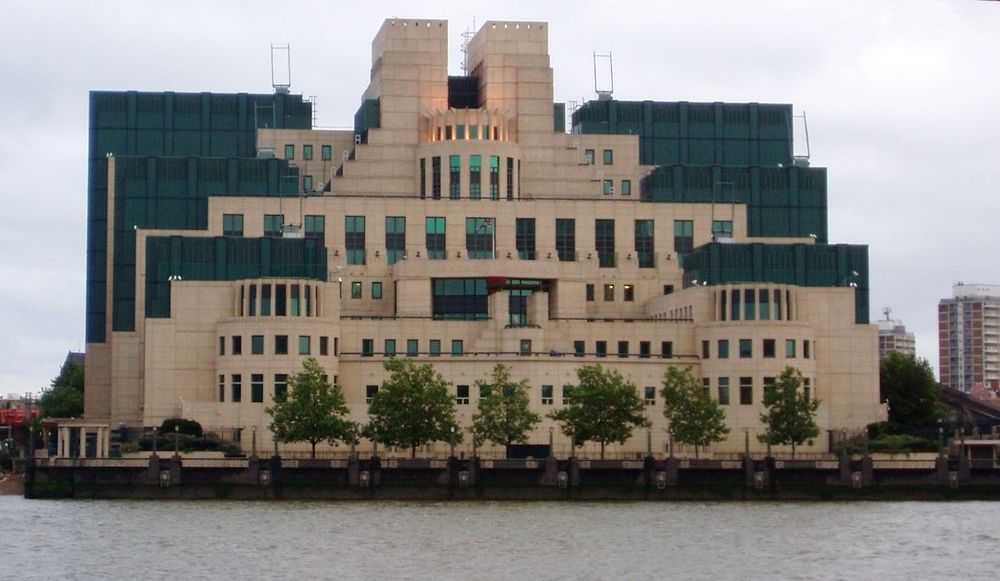
The “front line is everywhere,” she said at the agency’s headquarters in Vauxhall, London: “I’m talking about cyberattacks on critical infrastructure, drones buzzing airports and bases, aggressive activity in our seas — above and below the waves — state-sponsored arson and sabotage, and propaganda and influence operations that crack open and exploit fractures within societies.”
She signalled Britain’s intent to increase pressure on the Kremlin, warning “the export of chaos is a feature not a bug in the Russian approach to international engagement; and we should be ready for this to continue until Putin is forced to change his calculus.”
Metreweli is the latest figure from Britain’s spy services to warn about the links between Russian cyberattacks and kinetic harms facing the country. Earlier this month, the British government imposed sanctions on the entirety of Russia’s military intelligence agency and a number of its cyber officers after a public inquiry concluded it was responsible for a deadly nerve agent attack on British soil in 2018.
Last week, several more Russian and Chinese organizations were sanctioned and accused of attempting to undermine the West through both cyberattacks and influence operations, with Foreign Secretary Yvette Cooper warning Europe was “witnessing an escalation in hybrid threats.”
Operationally, Metreweli said MI6 would “sharpen our edge and impact with audacity” and referenced the agency’s heritage in the Special Operations Executive, the clandestine agency in World War II famously directed by Churchill to “set Europe ablaze.”
“We will never stoop to the tactics of our opponents. But we must seek to outplay them in every domain, in every way,” said Metreweli.
Tradecraft and 'wisdom'
Metreweli joined MI6 as a case officer in 1999 and had most recently led the agency’s real-life “Q branch” responsible for technology and innovation.
Her appointment from that division highlights a perceived tension between the classical kind of human intelligence ascribed to MI6 — developing agents and placing officers undercover in target organisations — and intelligence gathering methods driven by modern technologies, from bulk data analysis through to biometrics.
Metreweli’s predecessor, Sir Richard Moore, previously argued that advances in technology only served to emphasise the value of “human agents in the right places” noting: “They are never just passive collectors of information: our agents can be tasked and directed; they can identify new questions we didn't know to ask; and sometimes they can influence decisions inside a government or terrorist group.”
This was not to discount the value of technology. Speaking at a conference in London earlier this year, the head of GCHQ — Britain’s cyber and signals intelligence agency — said all of the country’s spies had access to AI tools at their workstations.
The MI6 chief described on Monday how her agency is using these kinds of tools to accomplish its mission: “Mastery of technology must infuse everything we do. Not just in our labs, but in the field, in our tradecraft, and even more importantly, in the mindset of every officer. We must be as comfortable with lines of code as we are with human sources, as fluent in Python as we are in multiple languages.”
However she stressed that the “defining challenge of the twenty-first century is not simply who wields the most powerful technologies, but who guides them with the greatest wisdom,” arguing that Britain’s “security, our prosperity, and our humanity depend on it.”
“We all have choices to make ahead about how we deal with the undercurrents shaping the world. About how, in our new, faster, more dangerous and tech-mediated world, it will be our rediscovery of our shared humanity, our ability to listen, and our courage that will determine how our future unfolds,” she said.
“It is not what we can do that defines us, but what we choose to do. That choice — the exercise of human agency — has shaped our world before, and it will shape it again.”



Alexander Martin
is the UK Editor for Recorded Future News. He was previously a technology reporter for Sky News and a fellow at the European Cyber Conflict Research Initiative, now Virtual Routes. He can be reached securely using Signal on: AlexanderMartin.79