
UK sanctions Russia’s GRU agency and cyber spies over deadly nerve agent attack
The British government on Thursday imposed sanctions on Russia’s military intelligence agency, the GRU, and a number of the agency’s cyber officers after a public inquiry concluded it was responsible for a deadly nerve agent attack on British soil in 2018.
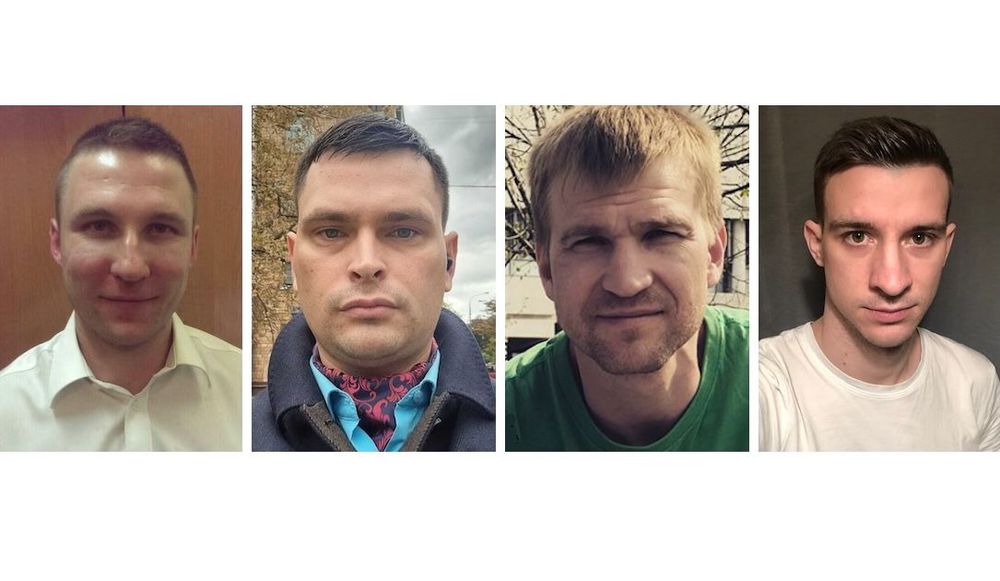
The sanctions target the GRU in its entirety for the first time and name 11 of its officers, three of whom — Anatoliy Vladimirovich Istomin, Igor Andreyevich Bochka and Aleksey Andreyevich Umets — have not previously appeared in Western sanctions or law enforcement announcements.
The Foreign Office said the GRU “regularly” seeks to conduct hybrid operations, including cyberattacks and disinformation campaigns, sometimes using criminal intermediaries. The sanctions, it said, are designed to dismantle “Russia’s pernicious spy networks.”
“Russia's reckless attempts to sow chaos and division are today exposed,” the government said, releasing photographs of several of the officers, including the three newly identified spies as well as Boris Alekseyevich Antonov who had previously been indicted in the United States over 2016 election interference.
The announcement followed the conclusion of a public inquiry into the death of Dawn Sturgess, who died months after the attempted assassination of former Russian spy Sergei Skripal in Salisbury. The inquiry’s final report, partially based on closed testimony from Britain’s intelligence agencies, found that Russian President Vladimir Putin personally authorized the use of the deadly Novichok nerve agent against Skripal.
Sergei, his daughter Yulia and police officer Nick Bailey were hospitalized following the attack and suffered long-lasting consequences to their health.
Sturgess and her partner Charlie Rowley were hospitalized in June 2018 after coming into contact with the discarded Novichok bottle. Sturgess died after suffering what the inquiry described as “a catastrophic cardiac arrest and consequent brain injury through lack of oxygen.” Rowley survived with what the inquiry called “lasting ill-effects.”
“The Salisbury poisonings shocked the nation and today’s findings are a grave reminder of the Kremlin’s disregard for innocent lives. Dawn’s needless death was a tragedy and will forever be a reminder of Russia’s reckless aggression. My thoughts are with her family and loved ones,” stated Prime Minister Keir Starmer.
“The UK will always stand up to Putin’s brutal regime and call out his murderous machine for what it is,” Starmer added. “Today’s sanctions are the latest step in our unwavering defence of European security, as we continue to squeeze Russia’s finances and strengthen Ukraine’s position at the negotiating table.”
‘Active threat’
Britain has summonsed the Russian Ambassador to the Foreign Office to demand the Kremlin respond to the inquiry’s findings.
“Putin and his GRU agents are an active threat to Britain’s citizens, our security and our prosperity,” said Foreign Secretary Yvette Cooper. “We will not tolerate this brazen and despicable aggression on British soil. That is why we are exposing and sanctioning those carrying out malign acts for Moscow and ramping up efforts to crush hostile Russian hybrid activity.”
Eight of the GRU’s cyber officers accused of carrying out operations, including those targeting the Skripals, were included in Thursday’s sanctions. Three additional GRU officers accused of “orchestrating hostile activity in Ukraine and across Europe” including by “plotting a terror attack on Ukrainian supermarkets targeting innocent civilians” were also designated.
It follows the British government sanctioning 18 other Russian military intelligence officers in July, stating their units “conducted online reconnaissance to help target missile strikes against Mariupol — including the strike that destroyed the Mariupol Theatre where hundreds of civilians, including children, were murdered.”
The full list of designated individuals and entities is:
The Main Directorate of the General Staff of the Armed Forces of the Russian Federation (the GRU)
Denis Aleksandrovich Smolyaninov
Vladimir Lipchenko
Yuriy Alekseyevich Sizov
Boris Alekseyevich Antonov
Anatoliy Vladimirovich Istomin
Igor Andreyevich Bochka
Aleksey Andreyevich Umets
Denis Igorevich Dnisenko
Dmitriy Yuryevich Goloshubov
Pavel Vyacheslavovich Yershov
Nikolai Yuryevich Kozachek
The sanctions freeze any British assets owned by the designated entities and make it a criminal offense to provide funds, goods or services to them. The designation also increases the legal powers available to the British state to take actions to disrupt GRU operations.



Alexander Martin
is the UK Editor for Recorded Future News. He was previously a technology reporter for Sky News and a fellow at the European Cyber Conflict Research Initiative, now Virtual Routes. He can be reached securely using Signal on: AlexanderMartin.79