
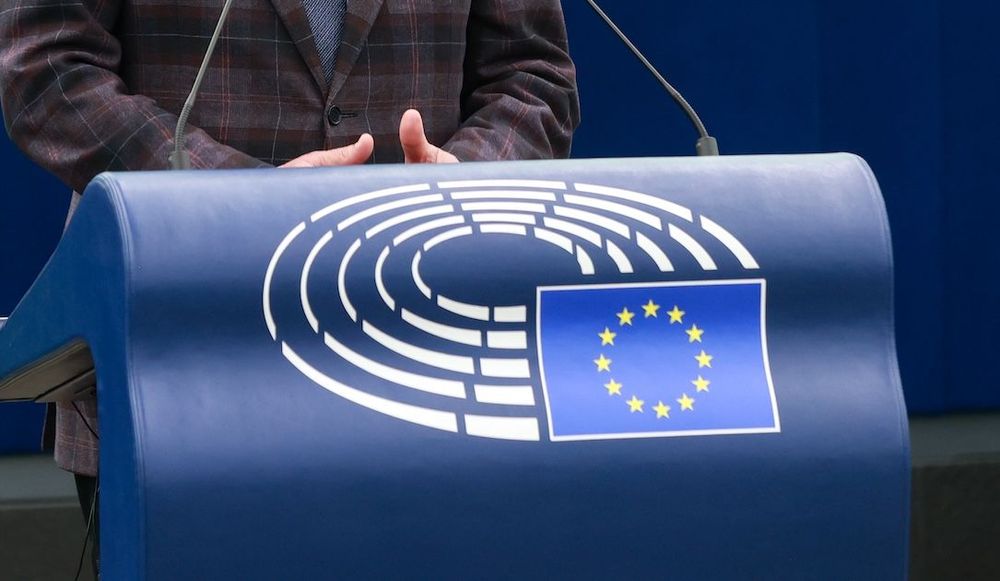
EU lawmakers propose that youth under 16 be barred from social media without parental consent
European lawmakers on Thursday approved an opinion proposing that youth under 16 not be allowed to access social media platforms without parental consent.
The opinion also states that social media access should not be allowed for children below age 13 under any circumstances.
In November, the European Parliament passed a resolution calling on the EU to set threshold ages under which children cannot access social media.
Parliament’s latest action comes amid a sweeping movement to ban social media for younger teens. In recent weeks, Spain, France, the Netherlands and the United Kingdom all have said they either plan to ban social media for children under age 15 or 16 or have said they are studying such a move.
Australia banned social media for youth under age 16 in December.
“The opinion promotes effective and privacy-friendly age verification across the European Union and calls for stronger and more consistent enforcement of existing laws protecting children online,” a Parliament press release said.
The text of the opinion proposes that a ban be included in a future law known as the Digital Fairness Act and argues that practices like targeted advertising, influencer promotions, addictive design features and virtual currencies in video games be covered by the new legislation.
The European Parliament lacks the ability to propose new laws and its opinions are not binding, but they can inform and influence the European Commission’s approach on legislation like the Digital Fairness Act.
The opinion also addresses artificial intelligence rules, underscoring that the tools pose risks related to misinformation, manipulation and emotional dependency,
“The impact of social media on young people requires a unified European strategy combining safety-by-design, algorithmic transparency and control, data minimisation, mental health prevention, privacy-first age assurance, digital literacy, participatory governance and evidence-based evaluation to ensure equal protection and empowerment for all,” the opinion states.
It stresses that the EU strategy should establish “consistent” protection for youth while also “recognizing parental responsibility.” Parents should be educated about the dangers social media pose so they can make informed decisions, the opinion states.



Suzanne Smalley
is a reporter covering digital privacy, surveillance technologies and cybersecurity policy for The Record. She was previously a cybersecurity reporter at CyberScoop. Earlier in her career Suzanne covered the Boston Police Department for the Boston Globe and two presidential campaign cycles for Newsweek. She lives in Washington with her husband and three children.