
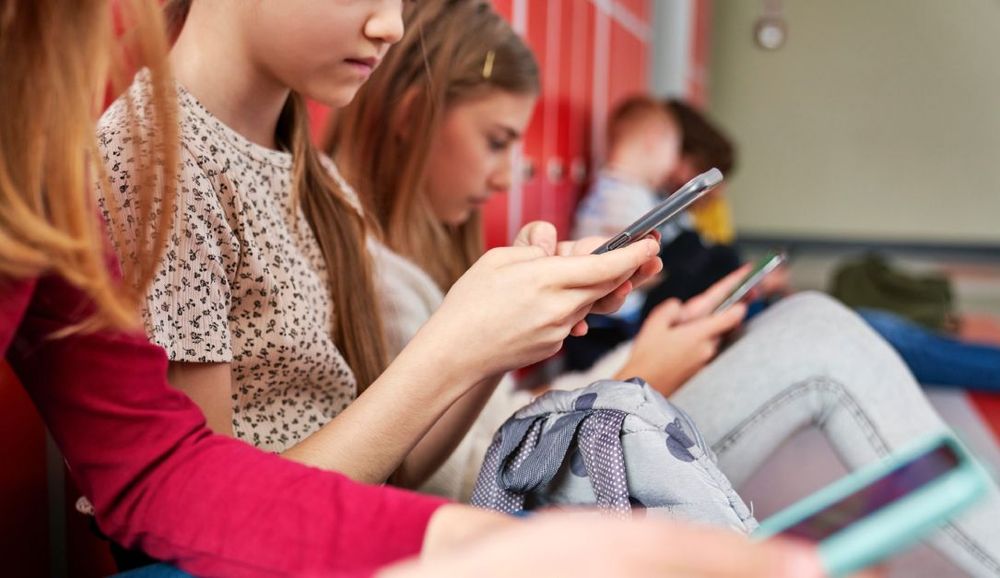
UK says it will consider banning social media for children
The British government announced Monday that it is considering banning social media for children 15 and younger as Prime Minister Keir Starmer warned “no option is off the table.”
In addition to a social media ban, officials said they are studying ways to improve age assurance technology, raising the digital age of consent, imposing phone curfews and restricting social media company practices that encourage addiction and what the government called “infinite scrolling.”
“Being a child should not be about constant judgement from strangers or the pressure to perform for likes,” Starmer said in a Substack post Tuesday. “For too many today, [social media use] means being pulled into a world of endless scrolling, anxiety and comparison.”
British ministers will visit Australia to “learn first-hand from their approach,” the government’s Monday announcement said, alluding to the country’s controversial ban on social media use for children under age 16.
About 4.7 million social media accounts were deactivated during the first week the new policy was in effect, Australia’s eSafety Commissioner Julie Inman-Grant said in a LinkedIn post Friday.
Britain’s Office for Standards in Education, Children's Services and Skills (Ofsted) also will crack down on schools by conducting inspections to ensure administrators are keeping phones out of the learning environment, officials said.
The government also intends to publish “evidence-based screen time guidance” to educate parents of children aged five to 16 about online dangers. Guidance for children five and younger will be published in April, officials said.
The government is prepared to “take robust action to protect children online,” Starmer said in his post while acknowledging that the issue is “hugely complex.”
Technology Secretary Liz Kendall reportedly acknowledged potential downsides of a ban in comments in Parliament, noting that it could prevent children from benefiting from good aspects of social media and allow harmful activities to thrive in less visible ways.
The initiative is being billed as a “national conversation,” with officials saying they intend to host events countrywide and solicit input from experts, parents, children and civil society. Civil society leaders worldwide have consistently warned that social media bans and age assurance measures carry risks, including censoring children and cutting LGBTQ+ teens off from vital information.
In his Substack post, Starmer cited the government’s pledge to investigate Grok and ban artificial intelligence nudification tools, measures which were announced in the wake of a surge of incidents where the artificial intelligence tool “undressed” women and minors.
The government’s announcement highlighted what it portrayed as the success of the country’s Online Safety Act, which mandates that social media companies, search engines, video-sharing sites, messaging apps, adult content sites and AI-generated content platforms check visitors’ ages.
Eight million people visiting adult sites now encounter age checks, the announcement said, and the number of children facing age verification measures has increased from 30% to 47% since the Online Safety Act took effect. Visitors to pornography sites have been cut by a third since July 2025 when the law took effect, meaning children are “less likely to stumble across material they should never see,” the announcement said.



Suzanne Smalley
is a reporter covering digital privacy, surveillance technologies and cybersecurity policy for The Record. She was previously a cybersecurity reporter at CyberScoop. Earlier in her career Suzanne covered the Boston Police Department for the Boston Globe and two presidential campaign cycles for Newsweek. She lives in Washington with her husband and three children.