
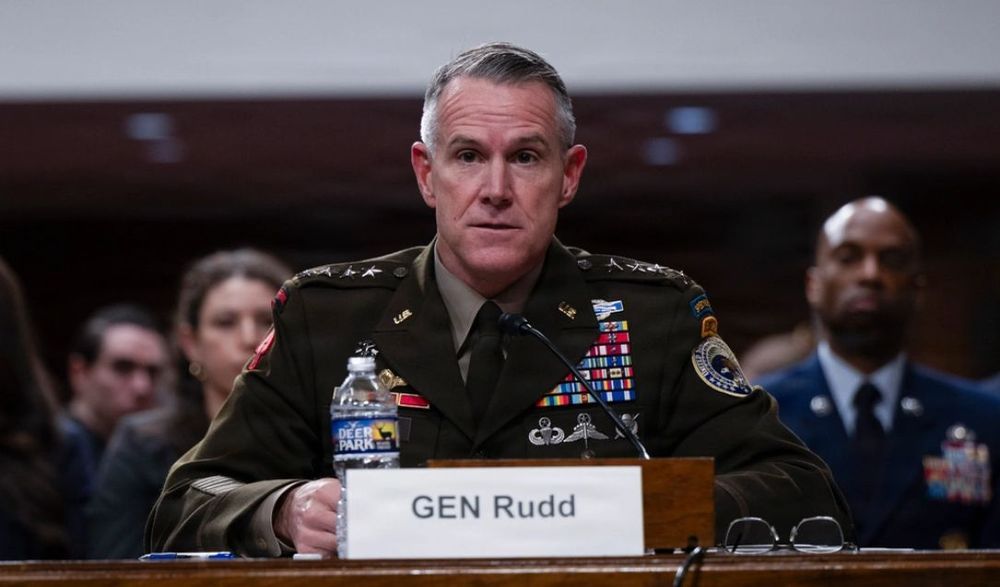
Rudd orders Cyber Command reviews as Pentagon presses reform agenda
The newly-installed head of U.S. Cyber Command has commissioned a pair of studies, including one by a major outside research organization, to examine how the military’s digital warfare arm might better modernize.
Army Gen. Joshua Rudd, who took the twin-leadership reins of Cyber Command and the NSA in March, recently tapped MITRE to conduct a potentially wide-ranging review into the organization, according to three people familiar with the matter.
The evaluation, the parameters of which are undefined, will most likely scrutinize Cyber Command’s acquisition model and could examine the so-called “service like authorities” granted by Congress that allow it to manage and equip personnel without being an independent military branch, said a command official.
The conclusions from MITRE, a nonprofit research outfit that has long supported federal cybersecurity work, are expected to be folded into Rudd’s own 90-day review of the command — a common practice for newly appointed senior military leaders, especially combatant commanders. It is expected to be completed next month.
Rudd, who spent most of his military career in special forces, also convened a “confederation” of senior leaders within the Cyber Command who had some kind of experience in special operations to conduct an internal study and come up with “quick wins” to implement, according to the official, who was not authorized to speak on the record.
“That came through and it was kind of a big nothingburger,” the official told Recorded Future News.
Current and former defense officials said the analyses are a sign that Rudd understands he has a limited amount of time to institute sweeping changes at the command and bring it more in line with President Donald Trump’s belief that the U.S. must be more confrontational in cyberspace.
They also come as the Pentagon hopes to overcome chronic challenges to fielding and retaining elite cyber warriors through a new force generation strategy dubbed “CYBERCOM 2.0” that officials hope will boost the command’s agility.
A key pillar of the strategy, which was approved during the Biden administration only to be revised and accelerated under Trump, is the creation of a Cyber Innovation Warfare Center that would resemble other rapid acquisitions offices.
That MITRE will dissect, and potentially suggest tweaks or alternatives to the command’s buying processes, has some observers worried a core part of strategy will be ignored.
The command official pushed back against that idea but conceded “there's some overlap with what MITRE is doing on acquisition.”
MITRE’s work would be “complimentary” to the 2.0 blueprint, the official said.
“If they scope it appropriately, there may be some good recommendations that come out of this,” according to the official, who predicted there wouldn’t be any more outside evaluations for the foreseeable future.
Rudd testified last month about the importance of the initiative, which the president's budget requests $75 million for in fiscal year 2027.
“CYBERCOM 2.0 is moving at pace and achieving new milestones each month,” he told the Senate Armed Services Committee, adding the effort “will enhance our ability to work more closely with industry and academia to develop, acquire and operationalize cutting edge capabilities.”
The command official and others described the timing of the reviews as unusual, given that previous Cyber Command chiefs, all of whom possessed considerably more military cyber experience than Rudd, arrived with a set of goals they wanted to accomplish before requesting outside help to gin up new ideas or search for efficiencies.
“There's clearly a higher level of scrutiny on Rudd, for a number of reasons,” the official said, a nod to the four-star’s dearth of knowledge and that his predecessor was unexpectedly fired last year.
“He’s basically saying, ‘Why should I wait six months to bring in someone to do an external look? I can get a better feel for what's going on in my command if I have all the looks going on at the same time.’”
A former senior cyber official said ordering studies now is a “decent idea” because Rudd “has a bit of a limited background in the space. The more information and opinions he hears, the better.”
The former official argued the “best thing he could do right now is to bring in a group of senior or retired ‘grey beards’ who actually worked in the space that can provide him insights into why things have been done a certain way, where he should focus his efforts, and pitfalls to avoid.”
“These advisors could be extremely valuable to him and I'm not sure why he hasn't done it.”
Cyber Command declined to comment. MITRE did not respond to a request for comment.



Martin Matishak
is the senior cybersecurity reporter for The Record. Prior to joining Recorded Future News in 2021, he spent more than five years at Politico, where he covered digital and national security developments across Capitol Hill, the Pentagon and the U.S. intelligence community. He previously was a reporter at The Hill, National Journal Group and Inside Washington Publishers.