
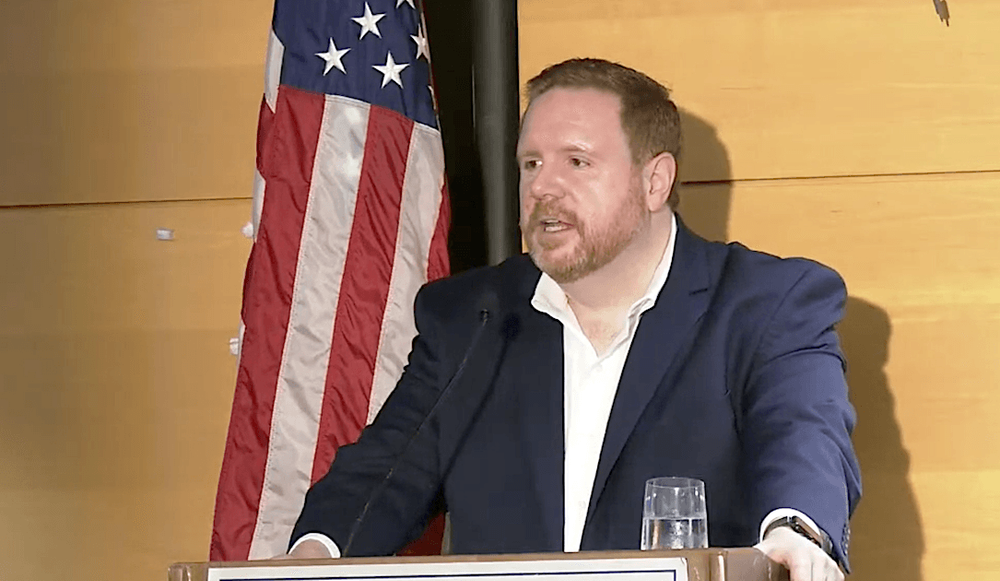
US cyber ambassador nominee Cassady confirmed in Senate
The Senate on Friday confirmed Adam Cassady to serve as the next U.S. ambassador for cyber and digital policy.
The chamber confirmed Cassady in a 51-47 vote on a package of more than 70 nominees. He is only the second person to hold the ambassador-at-large post, which has been vacant since the State Department’s inaugural cyber diplomat stepped down at the start of the current Trump administration.
It’s unclear how much influence Cassady, who currently serves as a senior official at the National Telecommunications and Information Administration, will actually yield as his role’s responsibilities changed after a major State Department reorganization last year.
The Bureau of Cyberspace and Digital Policy, which Cassady will helm, was divided into three entities, including a new Bureau of Emerging Threats, and saw its staff numbers cut as part of the reshuffle.
Cassady, who previously served at the Federal Communications Commission, faced little scrutiny at his confirmation hearing in April. He noted that the U.S. should work with “trusted partners who share our commitment to secure, resilient and open digital ecosystems.”
He declined to give a definitive answer on whether the U.S. should send advanced semiconductor chips to China.
“I don't have a strong point of view on that topic yet. Certainly I will very, very quickly develop one,” Cassady said.
Last month, Jeffrey Kessler, undersecretary of Commerce for industry and security, told the House Foreign Affairs Committee that “very few” of Nvidia’s H200 artificial intelligence chips have been shipped to China and Hong Kong — a sign that shipments are underway.
At the time of his hearing, Cassady said the administration was aiming to “balance very important competing considerations as it relates to both economic prosperity and national security. And if confirmed, that will be an issue that I dig very deeply into.”



Martin Matishak
is the senior cybersecurity reporter for The Record. Prior to joining Recorded Future News in 2021, he spent more than five years at Politico, where he covered digital and national security developments across Capitol Hill, the Pentagon and the U.S. intelligence community. He previously was a reporter at The Hill, National Journal Group and Inside Washington Publishers.