
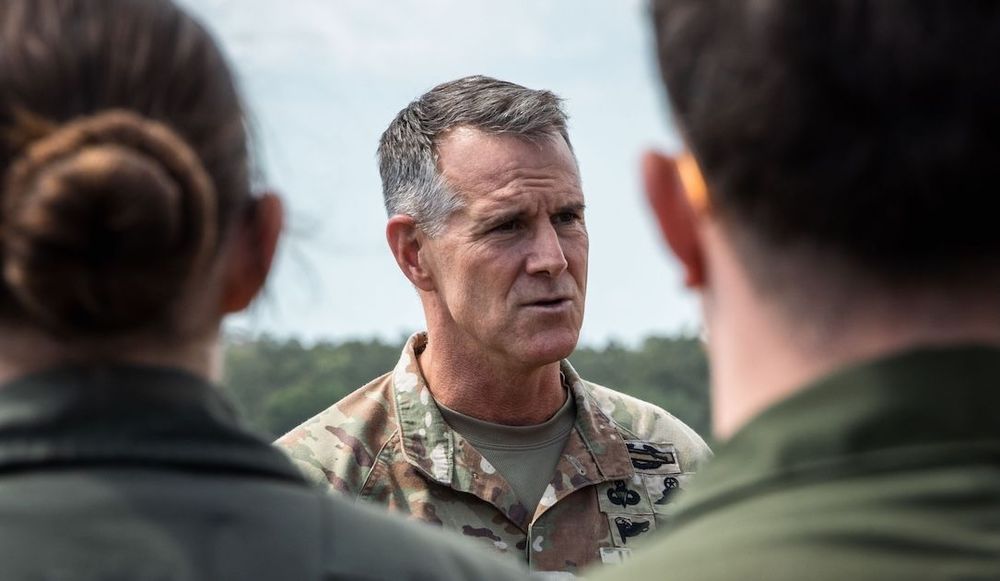
Rudd confirmed to head NSA, Cyber Command after near year-long vacancy
Army Lt. Gen. Joshua Rudd was confirmed by the Senate on Tuesday to be the next leader of U.S. Cyber Command and director of the National Security Agency, ending an almost year-long leadership vacuum atop the military's digital warfare organization and the nation’s largest spy agency.
He will replace Lt. Gen. William Hartman, who had led both entities in an acting capacity since last April after Air Force Gen. Timothy Haugh, and his top NSA deputy, were fired. Far-right activist Laura Loomer later claimed credit for the dismissals.
Rudd, who was confirmed 71-29 to serve as the “dual-hat” leader of the organizations, takes the reins as the U.S. faces mounting aggression in cyberspace from foreign adversaries at the same time the Trump administration has sought to shrink the size of the federal government, including thousands of NSA personnel.
Rudd currently serves as the deputy chief of U.S. Indo-Pacific Command and while has held a variety of leadership roles in special forces, and deployed to Afghanistan and Iraq, he has no experience in cyber operations or signals intelligence.
The lack of relevant qualification led Sen. Ron Wyden (D-OR) to oppose Rudd’s nomination. He forced Senate GOP leaders to put his confirmation to a rare floor vote.
In particular, Wyden, a longtime privacy hawk and a senior member of the Senate Intelligence Committee, was dismayed with Rudd’s vague answers when asked to commit to not using the NSA’s powerful foreign surveillance tools to spy U.S. citizens without a judicial warrant.
Rudd, whose latest assignment comes with a promotion to four-star general, pledged to follow the law if confirmed but declined to explicitly rule out the practice.
Wyden’s warning comes as lawmakers prepare to debate the renewal of Section 702 of the Foreign Intelligence Surveillance Act, a major surveillance authority used by the NSA that will expire next month without congressional action.
President Donald Trump has since told top congressional allies that he has settled on an 18-month “clean” extension of the statute, according to Capitol Hill sources, which would effectively punt the hot topic to well after the midterm elections.
However, on Monday Trump floated attaching the SAVE American Act, which would require photo IDs at polling stations, to a FISA renewal bill. The move would almost certainly complicate the passage of a reauthorization bill, if not sink it entirely.
During his second confirmation hearing, Rudd himself stressed the importance of Section 702.
“It's indispensable,” he said.
Rudd also indicated he would evaluate the efficiency of the dual-hat leadership role between Cyber Command and the NSA — an arrangement that has long been a target for some of Trump’s allies.
“If I’m confirmed for this, I think my role is to be objective about that as that comes up, or if it continues to come up as a topic,” he said.
In a statement, Intelligence Committee Chair Tom Cotton (R-AR) praised Rudd a “war hero with a lifetime of service to our nation.”
“He is the right choice to lead the protection of our nation from cyberattacks by Iran, Russia, and China,” he added. “Instead of gambling with the lives of our troops and the safety of the homeland, Senate Democrats should have confirmed his nomination weeks ago.”



Martin Matishak
is the senior cybersecurity reporter for The Record. Prior to joining Recorded Future News in 2021, he spent more than five years at Politico, where he covered digital and national security developments across Capitol Hill, the Pentagon and the U.S. intelligence community. He previously was a reporter at The Hill, National Journal Group and Inside Washington Publishers.