
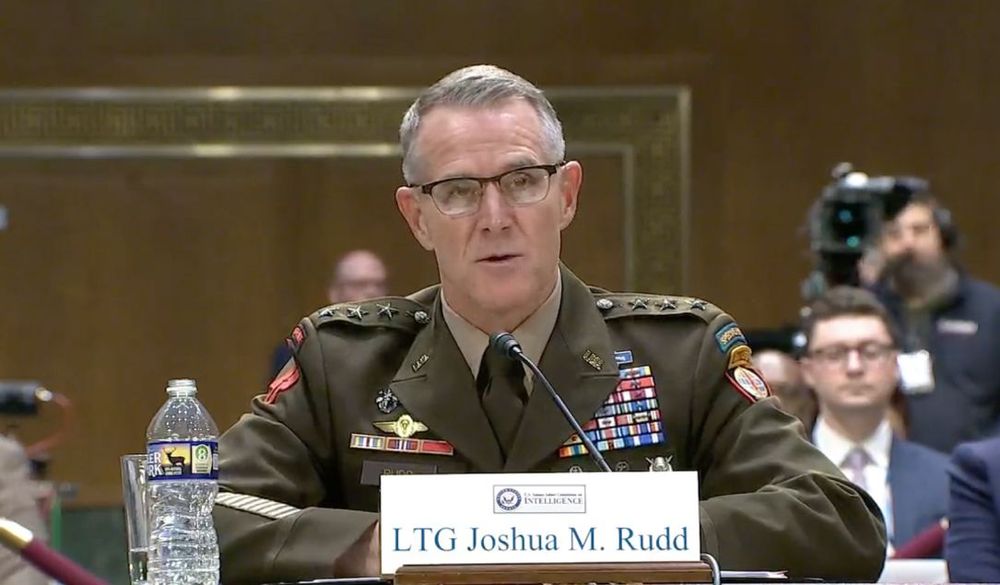
NSA pick champions foreign spying law as nomination advances
President Donald Trump’s choice to lead the National Security Agency on Thursday repeatedly defended a mass foreign surveillance power that is weeks away from expiring without congressional action.
The testimony by Army Lt. Gen. Joshua Rudd about the importance of Section 702 of the Foreign Intelligence Surveillance Act (FISA) could put him at loggerheads with the commander-in-chief and other national security officials, such as Director of National Intelligence Tulsi Gabbard, who has disparaged the foreign-spying power in the past.
“It's indispensable. I know it's been critical to mission outcomes, protection of our men and women in harm's way, and I know it's saved lives in the homeland,” Rudd, who is also the nominee to helm U.S. Cyber Command, told the Senate Intelligence Committee.
“If confirmed, certainly I would do everything I can to provide the best advice as we look to reauthorize or extend this authority,” he later added.
FISA gives spy agencies broad authority to collect communications from U.S. technology firms to hunt for national-security threats living overseas but also scoops up an unknown amount of Americans’ communications without a warrant.
Congress barely managed to reauthorize the program in 2024, brushing aside last minute objections by then former president Trump himself, who has claimed, without evidence, that it was used to spy on his 2016 campaign.
Section 702 is set to expire on April 19 but, thus far, no renewal legislation has been introduced. Congressional and administration officials say that while there have been discussions with the White House about some kind of extension, the decision ultimately rests with Trump himself.
Sen. Ron Wyden (D-OR) pressed Rudd if he believed a warrant should be required to search the massive 702 database, except in emergency situations.
“That's a topic that I'd need to look into and get a better understanding, to give you a more fulsome and complete answer on that one,” he replied, adding he has “supreme confidence that the men and women of the NSA are committed to protecting civil liberties.”
Sen. Mark Kelly (D-AZ) later asked Rudd to explain why the Watergate-era statute should matter to the “average American.”
“In my experience, quite simply, it saves lives,” he said.
Shortly after the hearing, the Senate Armed Services Committee, which shares jurisdiction of the “dual-hat” role, voted during executive session off the chamber floor to advance Rudd’s nomination.
The Intelligence panel most likely will vote on his nomination next week, potentially setting Rudd to be confirmed by the full Senate before February 6, when the command and agency’s acting chief, Lt. Gen. William Hartman, is slated to retire.


Martin Matishak
is the senior cybersecurity reporter for The Record. Prior to joining Recorded Future News in 2021, he spent more than five years at Politico, where he covered digital and national security developments across Capitol Hill, the Pentagon and the U.S. intelligence community. He previously was a reporter at The Hill, National Journal Group and Inside Washington Publishers.