
House of Lords backs legislation to ban social media for children under 16
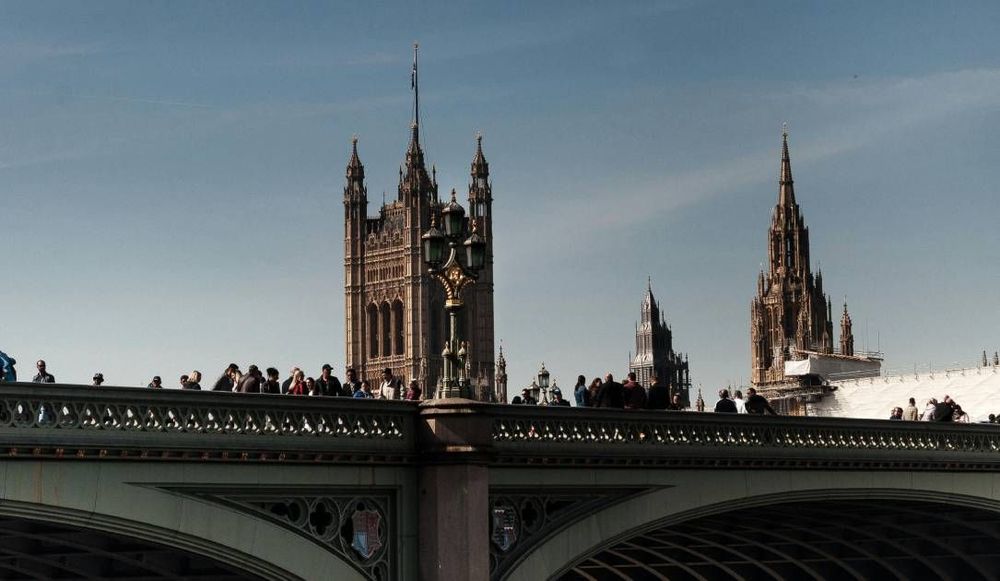
Britain’s House of Lords on Wednesday voted by an overwhelming margin to ban children under age 16 from accessing social media within a year.
The amendment to the “Children’s Wellbeing and Schools Bill” — passed by a margin of 261 to 150 — will make the ban law unless the House of Commons votes to cut the provision when the bill returns to that chamber.
The legislation also orders the country’s chief medical officers to publish guidance for parents on how social media use affects children at different stages of development.
On Monday, the British government announced that it has launched a “consultation” to consider a ban and that British ministers will visit Australia to learn more about the impact of Canberra’s social media law restricting children from accessing platforms.
Ministers are also studying raising the digital age of consent, barring social media companies from design choices that fuel addiction and imposing phone curfews.
Several members of the House of Lords expressed alarm about the impact social media is having on children in the run-up to Wednesday’s vote.
“We have reached an inflection point,” John Nash said. “We face nothing short of a societal catastrophe caused by the fact that so many of our children are addicted to social media.”
Nash cited studies showing that some children are spending seven hours or more on social media each day, leading to eating disorders, self-harm, depression, anxiety and attention deficits.
“There is now so much evidence from across the world that it is clear that, by every metric — health, cognitive ability, educational attainment, crime and economic productivity—children are being harmed,” the conservative member of Parliament said.
Parliamentarian Hilary Cass cited a letter signed by all 23 members of the UK’s Academy of Medical Royal Colleges describing “horrific cases they had treated” in children exposed to social media.
“My medical colleagues here, if there are any, will know that college presidents are like cats — you cannot herd them — so, when all 23 of them agree that there is a risk, you need to be very afraid,” Cass said.
Browsing the internet days before the vote, Cass said she learned that she could kill herself by inhaling helium and view videos of girls being choked.
Some members spoke out in opposition to the ban, citing a lack of clearcut evidence for the causal relationship between social media and mental illness.
“At this rate, all that Parliament would have to do is ban the internet for everyone and all problems would be solved,” Claire Fox said. “There is a danger of looking for easy answers and scapegoating social media for all society’s ills.”


Suzanne Smalley
is a reporter covering digital privacy, surveillance technologies and cybersecurity policy for The Record. She was previously a cybersecurity reporter at CyberScoop. Earlier in her career Suzanne covered the Boston Police Department for the Boston Globe and two presidential campaign cycles for Newsweek. She lives in Washington with her husband and three children.