
Google urges Supreme Court to strike down geofence warrants as unconstitutional
With the Supreme Court poised to rule for the first time on the constitutionality of geofence warrants, Google on Monday filed a brief with the high court arguing that the law enforcement tool is unconstitutional.
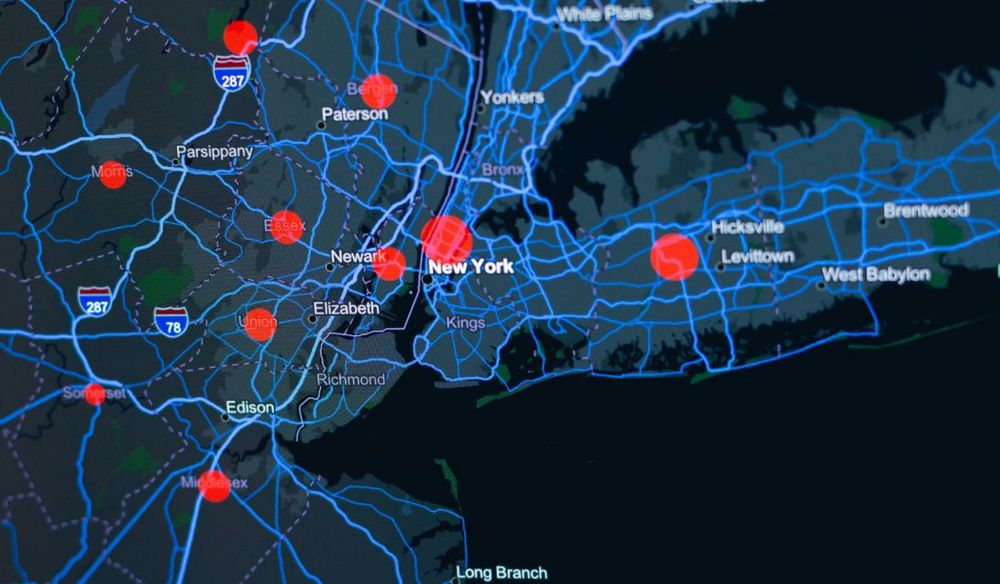
A geofence warrant is also known as a "reverse search warrant" because they let police demand technology companies pinpoint all mobile devices present in a specific geographic area during a particular time span. Geofence warrants help police find suspects, but sweep up the location of many innocent people, creating privacy and civil liberties concerns, critics say.
In July 2025, Google began storing all location history data on-device so that it is no longer able to respond to geofence warrants at all. The Supreme Court’s decision could still affect other tech companies whose practices haven’t changed and historic cases which Google may be asked to respond to.
The case at hand focuses on the trial of Okello Chatrie, a Virginia man who in 2019 pleaded guilty to committing a bank robbery. Police nabbed Chatrie after they asked Google to identify people whose location data put them near the scene of the robbery at the time it happened.
In its amicus brief, Google called the warrants a violation of people’s rights and said that in recent months it has objected to more than 3,000 geofence warrants on constitutional grounds.
A central question in the case relates to third party doctrine, which U.S. Solicitor General David Sauer has argued means that individuals “generally have no reasonable expectation of privacy in information disclosed to a third party and then conveyed by the third party to the government.”
In its brief, Google disagreed with that contention, saying the fact that location history was stored securely in the cloud “does not vitiate the constitutional protections afforded to this sensitive data.”
“Individuals’ documents and data stored electronically and securely in remote servers are the modern-day “papers and effects” protected by the Fourth Amendment,” Google’s brief says. “Though kept on servers in ‘the cloud,’ these documents are not publicly accessible… They reveal the most intimate details of a person’s life.”
Google also took issue with how geofence warrants sweep up innocent people and expose their sensitive locations. It said it has objected to thousands of “overbroad” geofence warrants, including some that would have exposed the location of thousands of innocent people.
The tech giant said it has successfully challenged a geofence warrant that captured location history for more than 1,000 people inside the Islamic Center of New Mexico as well as one seeking all location histories for users across “large portions” of San Francisco over a two-and-a-half day period.
“No court would authorize a physical search of hundreds of people or places, yet geofence warrants sometimes do so by design,” Google’s brief argued.



Suzanne Smalley
is a reporter covering digital privacy, surveillance technologies and cybersecurity policy for The Record. She was previously a cybersecurity reporter at CyberScoop. Earlier in her career Suzanne covered the Boston Police Department for the Boston Globe and two presidential campaign cycles for Newsweek. She lives in Washington with her husband and three children.