
Disinformation campaign targeted Tibetan parliament-in-exile elections
A China-linked online influence campaign attempted to undermine elections for the Tibetan parliament-in-exile over the weekend but appeared to have little impact, researchers said.
The operation, identified by the Digital Forensic Research Lab (DFRLab), was part of Spamouflage, a long-running influence network linked to Beijing. The effort relied on dozens of inauthentic social media accounts pushing criticism of the Tibetan government-in-exile and its leadership.
Despite deploying increasingly sophisticated tactics, including AI-generated images, the campaign largely failed to gain traction, researchers said.
“The network tries to drive wedges within the community,” the report noted. But the posts “attracted virtually no organic engagement.”
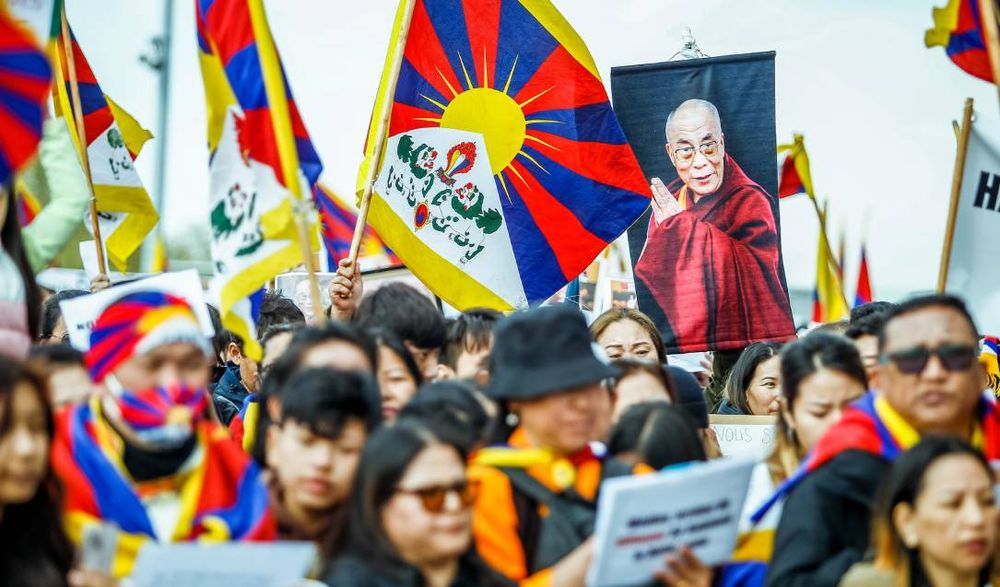
The campaign targeted elections for the Tibetan parliament-in-exile, which took place on Sunday. Tibetans voted to fill all 45 seats in the body, part of a democratic system run by the Tibetan government-in-exile based in Dharamsala, India, which represents an estimated 150,000 Tibetans living abroad.
The vote for political leader had already concluded in February, when incumbent Penpa Tsering, a frequent critic of Beijing and an advocate for Tibetan rights internationally, secured a second term.
Voting took place in 27 countries, including the United States. Official results are expected on May 13.
DFRLab researchers identified 90 Facebook accounts and 13 Instagram profiles tied to the Spamouflage campaign. The accounts pushed several narratives, most commonly personal attacks against Tsering portraying him as corrupt and power-hungry.
Other posts attempted to cast doubt on the legitimacy of the elections themselves, amplifying internal debates within the Tibetan diaspora and portraying the vote as manipulated.
Spamouflage accounts amplified these narratives by repeatedly sharing posts across the network and inserting them into existing discussions within Tibetan Facebook groups. The accounts also attempted to broaden their reach by posting in multiple diaspora groups.
But researchers found that most posts received little or no authentic engagement — likely because the operation relied on ordinary-looking Facebook profiles with limited reach rather than established pages with more followers.
According to the report, the activity continues a broader pattern of Spamouflage targeting Tibetan organizations online. In 2025, the network circulated accusations of corruption against the International Tibet Network, a global coalition of Tibet-related non-governmental organizations, and some of the same accounts had participated in earlier campaigns dating back to 2022.
The network frequently repurposes the same accounts to promote narratives targeting other countries. Researchers found that some profiles recently shifted to content about the Philippines, while Spamouflage campaigns have also targeted the United States, Taiwan’s 2024 elections and Japanese politics.
While the operation demonstrates increasing technical sophistication — particularly through the use of AI-generated imagery — it remains largely ineffective at influencing the Tibetan communities it seeks to reach, the researchers said.



Daryna Antoniuk
is a reporter for Recorded Future News based in Ukraine. She writes about cybersecurity startups, cyberattacks in Eastern Europe and the state of the cyberwar between Ukraine and Russia. She previously was a tech reporter for Forbes Ukraine. Her work has also been published at Sifted, The Kyiv Independent and The Kyiv Post.