
Cyber Command, NSA chief warns foreign adversaries likely to target midterms
The head of U.S. Cyber Command and the National Security Agency on Tuesday predicted that foreign adversaries would attempt to interfere in the upcoming midterm elections.
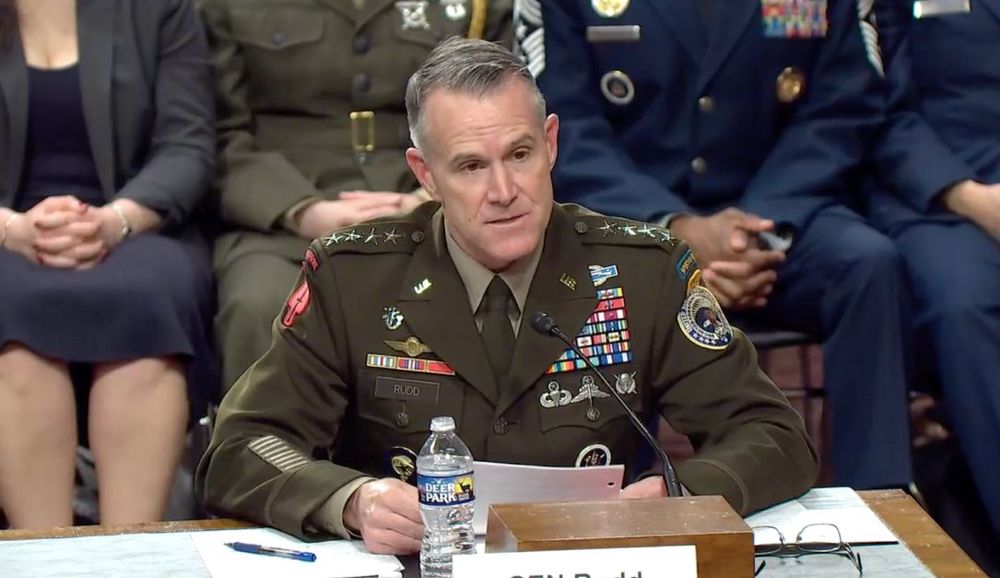
“It's reasonable to expect based on what we've seen in the past,” Army Gen. Joshua Rudd testified before the Senate Armed Services Committee.
“We certainly share your concern, and we're always looking, as you would expect us to, for any type of foreign activity that would undermine our democratic process,” he said in response to questions from Sen. Mazie Hirono (D-Hawaii). “We are postured and ready to support as required or tasked, making sure that we safeguard our elections.”
But Rudd admitted he wasn’t sure if the entities he helms have reconvened a joint election security task force — dubbed the Election Security Group (ESG) — that has played a role in keeping U.S. elections free of foreign interference since 2018.
“I don't know that an ESG has been established yet, but we are prepared to as required,” he said. “I think it is really important to set up an ESG and I will follow up with you on whether that is happening.”
In the past, Cyber Command and NSA have partnered with the Cybersecurity and Infrastructure Security Agency (CISA), the FBI and other agencies to prevent adversaries from tampering with the U.S. voting process, including conducting offensive digital strikes and other measures against foreign adversaries.
Federal and state election officials have braced for potential online attacks every election cycle since 2016, when Russia unleashed digital and disinformation campaigns that the U.S. intelligence community eventually concluded were attempts to tilt the presidential race in favor of Donald Trump.
Those concerns have grown since the start of the second Trump administration, with many policymakers and former national security officials accusing the White House of unilaterally disarming against potential foreign interference by shrinking CISA and gutting federal efforts that are supposed to combat mis- and disinformation.
The moves come even after the FBI and other agencies blamed Iranian hackers for a breach of the 2024 Trump campaign. The same hackers also attempted to target the Biden-Harris campaign.
If Rudd does stand up an election group for 2026, a key question will be if its co-leaders will be named publicly.
Recorded Future News first reported that, in a break with previous cycles, the identities of the 2024 co-chiefs were withheld to protect their personal safety, as well as leave public pronouncements to top national security leaders.
Sen. Dan Sullivan (R-Alaska) suggested Rudd use U.S. digital tools to expose foreign leaders who seek to undermine voter confidence.
“When dictators are using cyber ops to come after the most important thing to all of us, which is the American elections … I think we should flex a little offensive cyber capability,” he said.
“They want to come play with our elections, we can make sure their people know how corrupt they are leaders, because a lot of them are corrupt, and people should know that.”



Martin Matishak
is the senior cybersecurity reporter for The Record. Prior to joining Recorded Future News in 2021, he spent more than five years at Politico, where he covered digital and national security developments across Capitol Hill, the Pentagon and the U.S. intelligence community. He previously was a reporter at The Hill, National Journal Group and Inside Washington Publishers.