
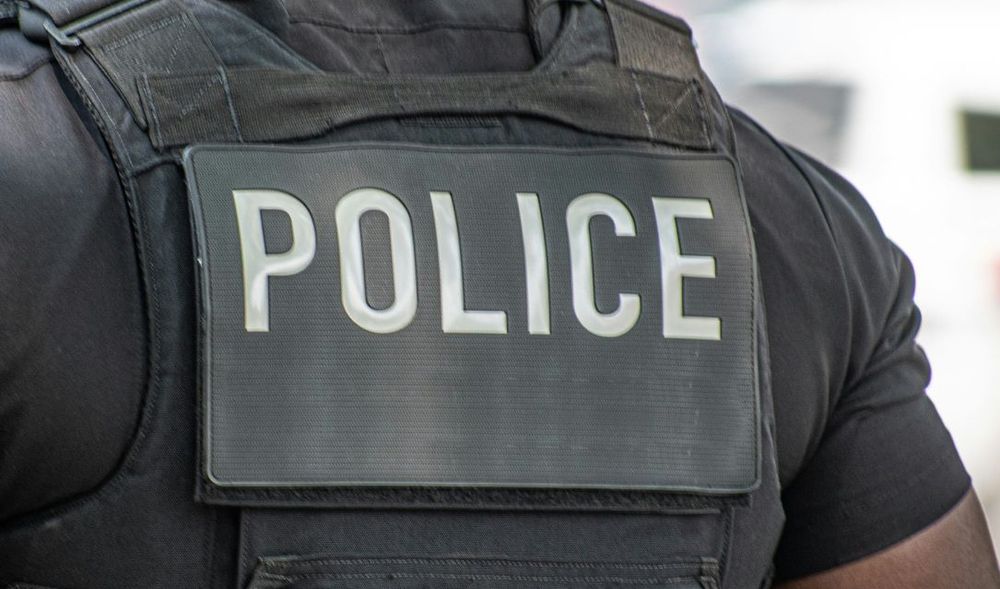
Canadian police department becomes first to trial body cameras equipped with facial recognition technology
The Edmonton Police Service in Canada on Tuesday announced that it is the first department to deploy officer-worn body cameras equipped with facial recognition technology.
The cameras, made by the police technology juggernaut Axon Enterprise, were deployed on a trial basis by as many as 50 officers on Wednesday, according to local news reports. The pilot will run through the end of December.
Acting Police Superintendent Kurt Martin reportedly said the body cameras will alert police to suspects with outstanding warrants for serious crimes. There are 6,341 people police in Edmonton have flagged or issued a “caution” for, Martin said. Those are the individuals who he said the police will focus on, partially in an effort to increase the number of warrants they clear through arrests.
Officers will compare images captured by the cameras to mugshots already stored by the Edmonton Police Service to find “officer safety flags and cautions from previous interactions,” Martin said.
Axon’s director of responsible AI told the CBC that the facial recognition system will not be turned on when officers are in the field and will only be enabled during investigations or once enforcement begins.
Officers will not be alerted to suspects whose faces resemble flagged mugshots while on duty, the CBC reported. Facial images of all people located within 13 feet of an officer’s camera will be sent to a police database to be compared with the flagged mugshots, police reportedly said.
Images will reportedly be deleted when no match is found.
The use of facial recognition in policing and other surveillance contexts has grown increasingly controversial, particularly since the systems are less accurate when analyzing people of color’s faces.
“I want to make it clear that this facial-recognition technology will not replace the human component of investigative work,” Martin reportedly said during a news conference Tuesday.
“In fact, the resemblances that are identified by this software will be human-verified by officers trained in facial recognition.”
Diane McLeod, Alberta’s information and privacy commissioner, told the CBC she is concerned by the development.
“From a privacy perspective, there are a number of issues with facial-recognition technology, particularly around accuracy,” she told the outlet.
The Edmonton Police Service will be required to submit a privacy impact assessment showing that the technology’s accuracy meets standards set forth in Canada’s Protection of Privacy Act, she reportedly said.
U.S. authorities have shown concern about how facial recognition technology can be inaccurate and discriminatory. In December 2023, the Federal Trade Commission (FTC), announced that Rite Aid had agreed to stop using the technology for five years after regulators found that customers were being harassed and thrown out of stores due to faulty matches. Many of the people who were wrongly identified were Black.
“I want to make it clear that this facial-recognition technology will not replace the human component of investigative work,” Martin reportedly said during a news conference Tuesday.
“In fact, the resemblances that are identified by this software will be human-verified by officers trained in facial recognition.”



Suzanne Smalley
is a reporter covering digital privacy, surveillance technologies and cybersecurity policy for The Record. She was previously a cybersecurity reporter at CyberScoop. Earlier in her career Suzanne covered the Boston Police Department for the Boston Globe and two presidential campaign cycles for Newsweek. She lives in Washington with her husband and three children.