
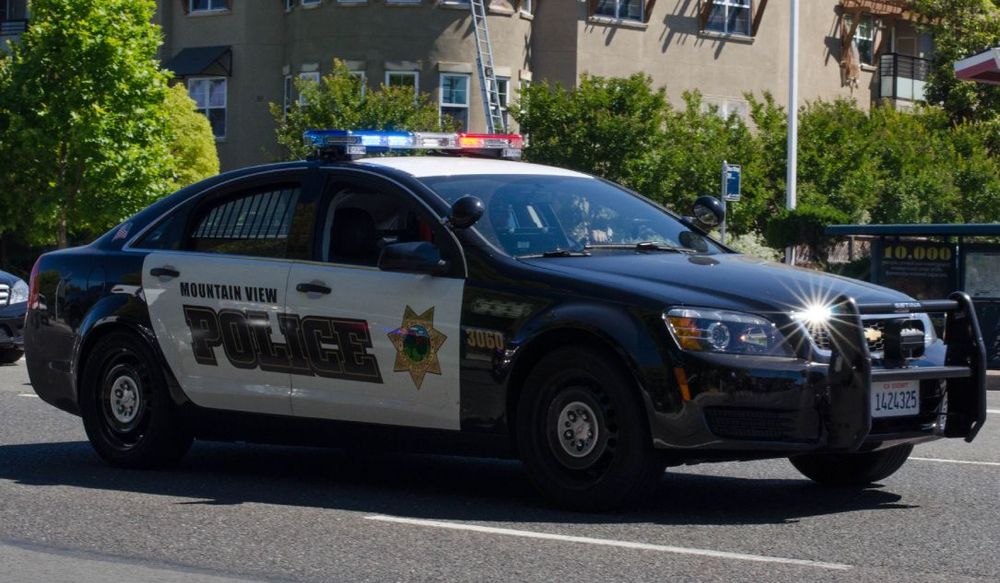
California city turns off Flock cameras after company shared data without authorization
Police in Mountain View, California on Monday turned off 30 Flock automated license plate reader (ALPR) cameras after learning that the company had allowed outside agencies to search the city’s database without its permission.
The cameras will stay off until the Mountain View City Council can discuss how to handle the matter at a February 24 meeting, Police Chief Mike Canfield said in a letter to the community.
Even with the decision on whether to reactivate the cameras apparently resting with the City Council, Canfield made clear in his letter that he opposes reactivating the cameras.
“While the Flock Safety pilot program demonstrated clear value in enhancing our ability to protect our community and help us solve crimes, I personally no longer have confidence in this particular vendor,” Canfield’s letter said. “Like many of you, I was deeply disappointed to learn that Flock Safety did not meet the city's requirements regarding our data access control and transparency.”
The police department reportedly learned that the out-of-state agencies and other police departments in California were searching its database following a public records request by a local news outlet.
As they prepared to answer the public records request, Mountain View Police learned that Flock had turned on a statewide lookup tool without their permission, a feature which allowed hundreds of California police departments to search their data for 17 months.
Canfield also said the state learned that out-of-state agencies had illegal access to one Mountain View camera from August through November 2024.
California law bars police departments from sharing ALPR data with out-of-state agencies and bans use of the data for immigration purposes.
Mountain View Police reportedly have an even stricter policy in place, only allowing other California agencies to search its database if they receive prior authorization by agreeing to abide by Mountain View data policies.
A spokesperson for Flock Safety said the company is “working through Mountain View's specific questions and concerns directly with the city, and will continue to engage with our partners in the police department and city government to resolve these issues.”
“We look forward to resuming our successful partnership following the upcoming Council meeting,” she added.
Mountain View’s contract with Flock Safety began in May 2024.
Canfield apologized to residents for giving them false assurances that the cameras’ data would be shared on a limited basis, saying that he was given bad information by Flock.
“The existence of access by out of state agencies, without the City's awareness, that circumvented the protections we purposefully built and believed were in place is frankly unacceptable to me and to the dedicated people of the MVPD,” Canfield said in his letter. “Furthermore, this vendor's lack of proactive disclosure is inconsistent with the standards the MVPD holds and the assurances we were given by the Flock team.”
Flock cameras have become an increasingly controversial issue since it has emerged that they have been used for immigration and abortion enforcement. Several cities have stopped using them, including Austin, Texas; Eugene, Oregon; Flagstaff, Arizona; and Cambridge, Massachusetts.
Officials in Eugene and Cambridge publicly criticized Flock for leaving cameras there activated even after the cities had asked for them to be turned off.



Suzanne Smalley
is a reporter covering digital privacy, surveillance technologies and cybersecurity policy for The Record. She was previously a cybersecurity reporter at CyberScoop. Earlier in her career Suzanne covered the Boston Police Department for the Boston Globe and two presidential campaign cycles for Newsweek. She lives in Washington with her husband and three children.