
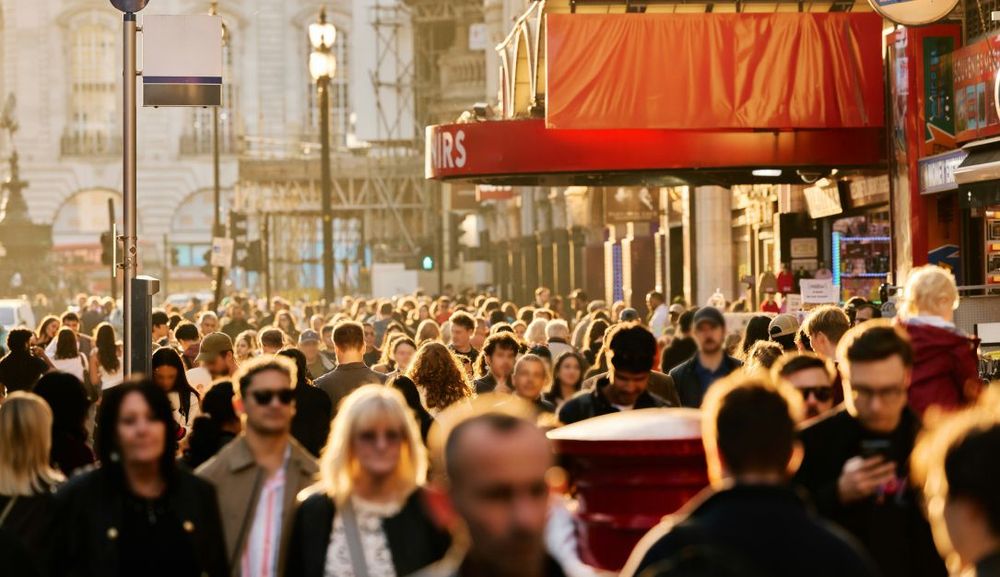
British officials seek to expand facial recognition technology use
The British Home Office on Thursday said it wants law enforcement to deploy facial recognition and similar technologies on a “significantly greater scale” and has initiated a new public consultation process to create a stronger legal framework for its use prior to the expansion.
On Thursday, the Home Office unveiled the public survey seeking citizen input on how the technology should be regulated and how to best safeguard people’s privacy. The consultation process closes on February 12.
Police have used facial recognition in Britain since 2017 and controversy has mounted as more aggressive deployments have been undertaken, including live facial recognition which involves processing real-time video footage of people passing a camera. Images gathered are then compared against a database containing facial images for people sought by police.
Policing and crime minister Sarah Jones heralded facial recognition technology as a “valuable tool in tackling serious crime” in an introduction to the consultation document, holding that law enforcement has notched many successes as a result of its use.
Jones said that her staff has listened to civil society groups with concerns about oversight, transparency and bias, but noted that surveys of the public have indicated two out of every three citizens support the use of the technology as long as appropriate protections are in place.
“After careful consideration, whilst it is clear there is a legal framework within which facial recognition can be used now, I believe that confident, safe, and consistent use of facial recognition and similar technologies at significantly greater scale requires a more specific legal framework,” Jones said in a foreword to the consultation document.
“This will ensure law enforcement can properly harness the power of this technology whilst maintaining public confidence over the long term.”
Hours after the public survey was released, the Home Office issued a separate report detailing findings by the National Physical Laboratory (NPL), which studied the accuracy of the technology. The second Home Office report acknowledged that the NPL testing revealed facial recognition technology used by police was “more likely to incorrectly include some demographic groups in its search results.”
The Metropolitan Police have reportedly made 1,300 arrests using facial recognition technology since 2023. Many of those arrested were rapists and other violent criminals, the Home Office reports.
The consultation is soliciting public input on a variety of issues, including which technologies should fall under the new framework, which organizations it should cover, when and how the technologies should be deployed and what privacy protections are needed.
Privacy advocates say there are reasons to be skeptical of the technology. A 2012 ruling from Britain’s High Court held that police were illegally retaining mugshots of hundreds of thousands of citizens who had been arrested but never charged.
The court ordered that the practice be changed “in months, not years,” but nothing was done until 2017 when the government said it would retain innocent people’s mugshots for six years, flouting the court ruling.
Gathering and searching for individuals’ facial images is “generally less intrusive [than collecting and searching for DNA profiles or fingerprints] as many people’s faces are on public display all of the time,” the Home Office has said in the past.
However, Alastair MacGregor, the independent biometrics commissioner in Britain in 2015, wrote a report then that warned “a searchable police database of facial images arguably represents a much greater threat to individual privacy than searchable databases of DNA profiles or fingerprints.”
Subsequent biometrics commissioners agreed with MacGregor’s take and last year commissioner Fraser Sampson accused the British government of “vandalism” over its “shocking” plans to nullify existing protections for surveillance in public.



Suzanne Smalley
is a reporter covering digital privacy, surveillance technologies and cybersecurity policy for The Record. She was previously a cybersecurity reporter at CyberScoop. Earlier in her career Suzanne covered the Boston Police Department for the Boston Globe and two presidential campaign cycles for Newsweek. She lives in Washington with her husband and three children.