
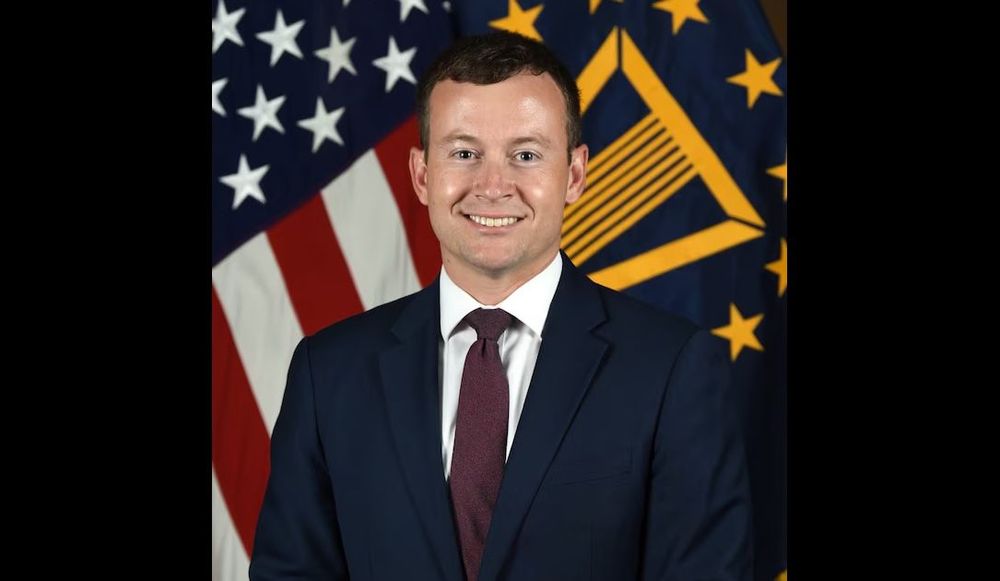
Announced pick for No. 2 at NSA won’t get the job as another candidate surfaces
The Trump administration has changed its mind about who will be the new No. 2 at the National Security Agency, amid internal White House opposition to the pick and attacks from far-right conservatives.
Joe Francescon, who was announced in August as the next NSA deputy director, was recently informed he will no longer get the job, multiple sources familiar with the matter told Recorded Future News.
The administration now plans to name Tim Kosiba, who formerly held top roles at the NSA and FBI, to the role, according to these people, who were granted anonymity to candidly discuss the personnel change.
The switch is the latest turbulence for the world’s most powerful electronic spying agency, which has been without a Senate-confirmed leader for more than eight months, witnessed changes among several senior roles and undergone massive personnel cuts. The deputy position does not require Senate confirmation.
Despite being named months ago, Franceson, a former NSA analyst who held senior roles on the National Security Council during President Donald Trump’s first term, had yet to begin work. His selection came under almost immediate scrutiny from far-right activist Laura Loomer, who claimed Francescon had donated money to a Democratic congressman.
There was also resistance in the administration to Franceson becoming NSA deputy chief, a position that oversees much of the agency’s day-to-day operations and acts as a filter to provide only the most critical information to its leader.
Kurt Olsen, a former Trump campaign lawyer who worked on the effort to overturn the 2020 election results and is now a special government employee, attended the Conservative Political Action Conference Circle Retreat and Gala at the Mar-a-Lago Club in Florida last month and lobbied Trump to back Kosiba, handing him the former official’s resume, according to sources.
Francescon was also opposed by Sergio Gor, who served as the director of the White House Presidential Personnel Office until October, two former Trump administrations officials told Recorded Future News. Gor, now the U.S. ambassador to India, felt he had been left out of the NSA deputy selection process.
The administration asked Francescon to consider other roles at the spy agency, but he declined and recently accepted a position in the private sector.
Francescon declined to comment on this story.
The White House did not respond to a request for comment.
The new pick
It’s unclear when the administration will announce Kosiba for the deputy role, though he recently went to NSA headquarters at Fort Meade, Maryland, for his polygraph test, according to two U.S. intelligence officials.
Earlier this year the White House had considered Kosiba to be the next deputy assistant secretary of Defense for cyber policy but he didn’t pass the vetting process for unknown reasons. He is expected to get the NSA post thanks to Olsen’s support, the officials said.
Kosiba, who served in government for over three decades before leaving in 2021, was previously hand-picked by now-retired U.S. Cyber Command and NSA chief Gen. Paul Nakasone to serve as the deputy commander of NSA Georgia, one of the agency’s field hubs
He previously worked in NSA’s elite hacking unit known as Tailored Access Operations, and Joint Functional Component Command for Network Warfare, which predated Cyber Command.
Multiple openings
There are still more changes ahead for the spy agency.
Sheila Thomas, who has been the NSA’s acting deputy chief, will retire at the end of the month.
Natalie Lang, the current director of operations, has been told she won’t be promoted to another position, according to sources.
Meanwhile, the dual-hat role of Cyber Command and NSA chief remains empty. Army Lt. Gen. Joshua Rudd, the No. 2 a U.S. Indo-Pacific Command, is the administration’s top choice for the post.
However, it’s unclear if, or when, Trump will formally announce the pick.
If chosen, Rudd’s nomination likely won’t be submitted to the Senate until next month, when the second session of 119th Congress begins.


Martin Matishak
is the senior cybersecurity reporter for The Record. Prior to joining Recorded Future News in 2021, he spent more than five years at Politico, where he covered digital and national security developments across Capitol Hill, the Pentagon and the U.S. intelligence community. He previously was a reporter at The Hill, National Journal Group and Inside Washington Publishers.