
US intel chiefs urge lawmakers to extend Section 702 surveillance power without changes
U.S. intelligence leaders on Thursday presented a united public front in favor of extending a key national security surveillance power without changes, providing momentum to backers of such an approach before a crucial week in Congress.
The White House has privately asked its congressional allies for an 18-month “clean” extension of the spy law known as Section 702 of the Foreign Intelligence Surveillance Act (FISA), which enables broad electronic surveillance of the communications of overseas security threats.
House Speaker Mike Johnson (R-LA) has said he will put such a renewal on the chamber floor next week, despite vocal opposition from hardline Republicans and progressive Democrats that won’t support an extension without more privacy safeguards, including a warrant requirement for law enforcement and intelligence analysts to access the massive Section 702 database.
The authority will expire on April 20 without congressional action.
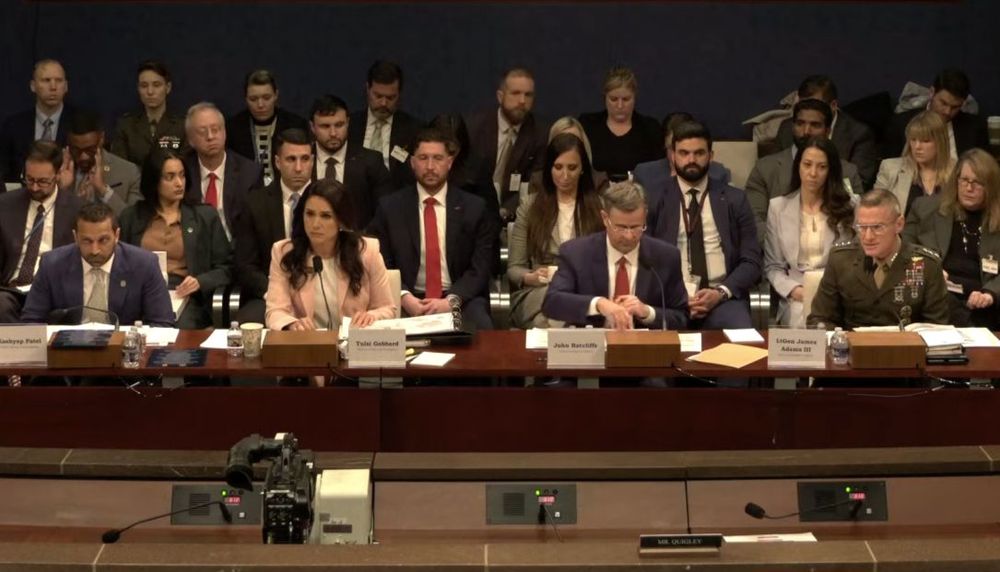
The remarks at the House Intelligence Committee’s annual hearing on worldwide threats offered the most vocal support for President Donald Trump’s strategy to date.
“I wish the reauthorization was longer than 18 months, congressman,” CIA Director John Ratcliffe said in response to questions from Rep. Darin LaHood (R-IL).
“I wish you all would consider for longer than that, so that, regardless of who the president is, he or she would have the benefit of a tool that's indispensable across administrations, provides more than half of the important, actionable intelligence” the commander-in-chief relies on, he added.
FBI Director Kash Patel, who earlier in the session rattled off his agency’s efforts at better compliance with the law since a host of reforms were made during the last renewal in 2024, agreed.
“I’d like five to ten years,” he said.
Patel and Ratcliffe on Wednesday provided all House members a classified briefing on the expiring spy law to bolster the administration’s case for a tweak-free renewal. Their remarks and leadership on the issue is somewhat ironic considering the last extension was winnowed down to just two years to appease then former president Trump’s right-wing base and allow him, if elected, to put his own stamp on the law.
The new approach has put Director of National Intelligence Tulsi Gabbard in an awkward position. In 2020, Gabbard, then a Democratic congresswoman from Hawaii, introduced legislation that would have repealed the authority and other spying capabilities.
However, today she said she would “support the president's decision to execute this.”
In his opening statement, House Intelligence Chair Rick Crawford (R-AR) said he was working with Rep. Jim Hime (CT), the panel’s top Democrat and House Judiciary Committee Chair Jim Jordan (R-OH) — who has railed against Section 702 for years — to support Trump's request and “provide more time to assess the implementation” of the nearly five dozen reforms included in the last reauthorization.
Still, the first major hurdle is whether Republicans can advance a rule to set up a final vote on the House floor.
If it does make it to the full chamber, Himes previously predicted many Democrats would not support any renewal of spying powers, putting even more pressure on GOP leaders to convince their members.
And if a bill passes, there could be headwinds in the Senate where the last extension passed with the bare minimum 60 votes required.
Also on Thursday, a coalition of privacy and civil liberty groups sent a letter to congressional leaders arguing against renewing FISA without limits at a time when the federal government’s use of artificial intelligence is rapidly expanding.
“The law simply has not kept pace with the rapidly growing capabilities of AI,” the letter states. “We should all share the fear that powerful AI makes it possible to conduct invasive surveillance at unprecedented scale, and that these tools pose serious risks to our fundamental liberties.”



Martin Matishak
is the senior cybersecurity reporter for The Record. Prior to joining Recorded Future News in 2021, he spent more than five years at Politico, where he covered digital and national security developments across Capitol Hill, the Pentagon and the U.S. intelligence community. He previously was a reporter at The Hill, National Journal Group and Inside Washington Publishers.