
US intelligence chief grilled on absence of election threats in security assessment
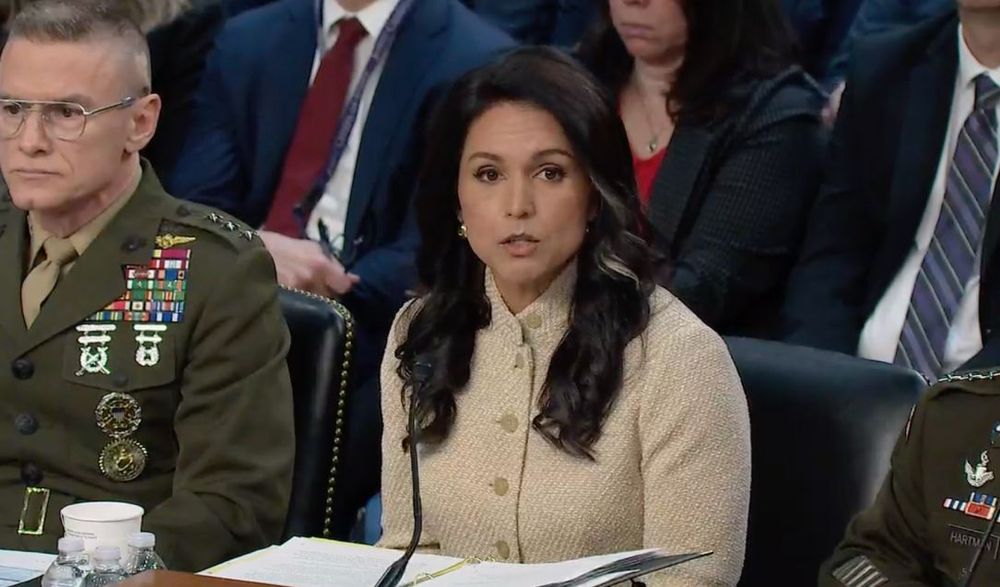
The top U.S. intelligence official on Wednesday defended omitting foreign threats to elections from the latest assessment of global dangers, as well as her presence during a FBI raid of a Georgia election office earlier this year.
In the public portion of an annual briefing on the globe’s greatest security threats, Sen. Mark Warner (VA), the top Democrat on the Intelligence Committee, pressed Director of National Intelligence Tulsi Gabbard about why the report doesn't mention potential foreign adversary aims to interfere in elections for the first time since 2017.
“Are you saying there is no foreign threat to our elections in the midterms this year?” Warner asked.
“As I stated in the outset of my remarks, this year’s annual threat assessment matches the prioritization of threats,” Gabbard replied.
Previous clandestine community assessments have documented, at least at a high level, attempts by Iran, Russia or China to sway voters with online propaganda or through cyber operations.
However, with less than eight months before November’s midterms, there is concern among policymakers and former U.S. national security officials that the Trump administration is ignoring the risk of foreign influence efforts around the ballot box — citing cuts to entities like the Cybersecurity and Infrastructure Security Agency (CISA) and the lack of key appointments, such as a chief of the Foreign Malign Influence Center.
Warner remarked that the omission “does not mean the threat has disappeared. It means the intelligence community is no longer being allowed to speak honestly about it."
Meanwhile, Democrats have expressed alarm over why Gabbard was present for the FBI’s search of 2020 election records in Georgia in January, despite there being no evidence to date of a foreign nexus to that investigation.
Gabbard said she did not participate in a law enforcement search of the elections hub — which has long been the target of President Donald Trump’s conspiracy theories about his loss in the 2020 election — but was there to observe the action "at the request of the president.”
“I did not participate in a law enforcement activity, nor would I, because that does not exist within my authorities,” she said.
Sen. Jon Ossoff (D-GA) inquired when Trump asked her to go the FBI raid to seize 2020 election ballots and records.
"The day of the raid," she said, before declining to say how the message was delivered.
“It was a request from the president and his administration to go and help oversee this warrant being executed, along with the deputy director of the FBI."
Wednesday’s open session was largely devoted to the ongoing conflict with Iran, with few mentions of digital security issues. There was a single exchange devoted to a powerful electronic surveillance tool that is set to expire about a month and Volt Typhoon, the notorious Chinese hacking operation that burrowed into U.S. critical infrastructure networks.
Speaking to reporters after the hearing, Warner said “we have not seen any decline in efforts of foreign parties to interfere in our democracy.”
“What is almost equally concerning is the idea that at some late date, the administration may gin up intelligence, real or not, to use an excuse to bring in federal forces” and seize control of state and local elections, he added.


Martin Matishak
is the senior cybersecurity reporter for The Record. Prior to joining Recorded Future News in 2021, he spent more than five years at Politico, where he covered digital and national security developments across Capitol Hill, the Pentagon and the U.S. intelligence community. He previously was a reporter at The Hill, National Journal Group and Inside Washington Publishers.