
Ukraine exposes ransomware network extorting US oil, healthcare firms
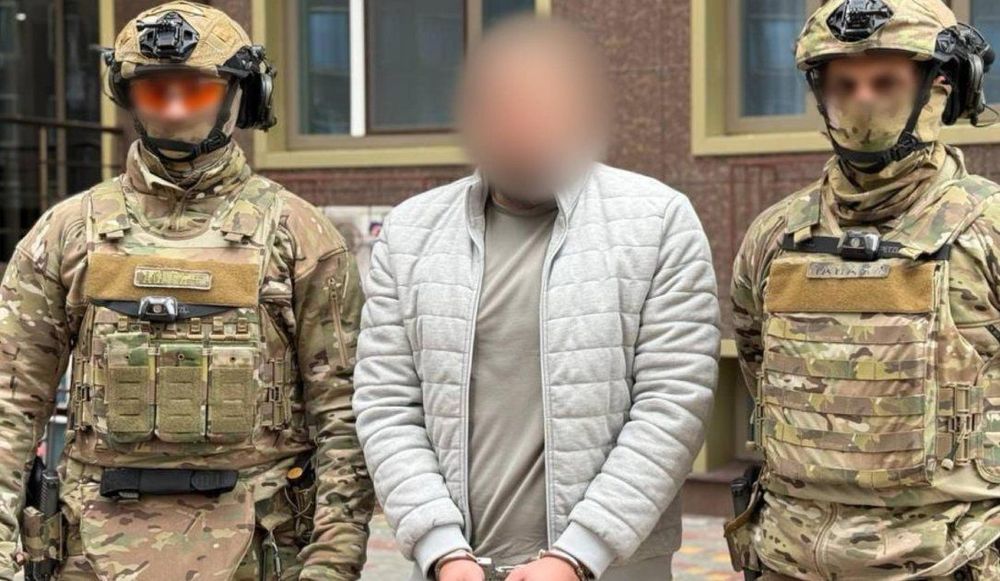
Ukrainian authorities arrested four suspected members of an international ransomware network accused of extorting more than $40 million from companies around the world.
The operation, carried out in cooperation with the FBI, targeted a criminal organization with at least 27 members from countries including Ukraine, Russia and Kazakhstan, Ukraine's Prosecutor General's Office said Wednesday.
Authorities linked the group, which they did not name, to a wider network of more than 60 people operating across eight jurisdictions, including former members of the notorious Conti ransomware gang. The hackers extorted at least 28 companies for a combined $40.5 million, although authorities said the total financial damage could be higher.
The hackers targeted companies in the oil and gas, pharmaceutical, manufacturing and logistics industries, as well as financial institutions and critical infrastructure operators.
During the international law enforcement operation, Ukrainian police conducted 66 coordinated searches in Kyiv and 11 other regions of the country, reportedly with the participation of U.S. law enforcement officials. Investigators seized computers, mobile phones, bank cards, about $370,000 in cash and 20,000 euros (nearly $22,000).
The four suspected key members of the organization could face up to 15 years in prison if convicted. Authorities said they were continuing to identify other members of the network.
Ukrainian court records reviewed by Recorded Future News identify one of the suspects as a Ukrainian citizen from the city of Dnipro. Investigators allege that he specialized in social engineering, calling employees of U.S. companies while posing as technical support staff to obtain login credentials and gain access to corporate networks. He allegedly received cryptocurrency payments for his involvement.
Alleged victims
The court documents also identify several U.S. companies allegedly targeted by the group, including oil producer Warren Oil Company, tire manufacturer Maxxis International-USA, energy services company Newpark Resources and health care services provider Quantum Health.
The hackers allegedly breached Warren Oil Company in August 2024 and stole approximately 1.4 terabytes of data. The company paid approximately $5 million in bitcoin, according to Ukrainian court records.
Two months later, the group allegedly stole 142 gigabytes of data from Maxxis International-USA. The hackers also targeted Newpark Resources in October 2024, tricking employees into revealing their credentials to gain access to the company's network. According to court records, Newpark paid $1.5 million after the attackers initially demanded $10 million.
In another attack in May and June 2026, the group allegedly demanded $15 million from Quantum Health, which ultimately paid $5 million in cryptocurrency, according to court records.
Three of the U.S. companies named in Ukrainian court records — Newpark Resources, Maxxis International-USA and Quantum Health — had previously publicly acknowledged cyberattacks, however their disclosures had not confirmed the ransom payments.
Multilayered structure
According to court records, the criminal organization had a hierarchical structure that included leaders, coordinators, social engineering specialists, technical operators and individuals responsible for handling illicit payments.
One member allegedly recruited hackers through underground forums, seeking people with expertise in programming, network administration, cybersecurity and social engineering.
The group used private communication platforms, including Rocket.Chat, qTOX and Telegram to coordinate its operations, as well as servers located outside Ukraine.
According to Ukrainian police, the hackers relied on social engineering and stolen credentials to gain access to corporate networks before deploying ransomware to pressure victims into paying. Posing as IT support employees, the attackers persuaded workers to disclose their login credentials or install remote access software, allowing them to enter corporate systems.
The attackers also developed a platform that used AI-generated voice messages to automate fraudulent phone calls, according to Maksym Tsutskiridze, acting head of Ukraine's National Police.
Once inside a company's network, the hackers stole sensitive information, encrypted files and disrupted business operations. They then demanded millions of dollars in cryptocurrency to restore access, threatening to publish the stolen data if victims refused to pay.
The court documents indicate that Ukrainian investigators obtained access to the hackers' internal communications, allowing them to reconstruct individual attacks.
The investigation also uncovered links to Conti, a once-dominant Russian-speaking ransomware operation responsible for attacks against hospitals, governments, businesses and critical infrastructure around the world. Conti effectively dissolved as an organization in 2022, but many of its members subsequently moved into other ransomware operations, including Black Basta and Royal.
Ukrainian authorities did not identify the ransomware strain used in the attacks described in Wednesday's announcement or specify which suspects had previously belonged to Conti.



Daryna Antoniuk
is a reporter for Recorded Future News based in Ukraine. She writes about cybersecurity startups, cyberattacks in Eastern Europe and the state of the cyberwar between Ukraine and Russia. She previously was a tech reporter for Forbes Ukraine. Her work has also been published at Sifted, The Kyiv Independent and The Kyiv Post.