
Trump administration officials size-up a bad stretch for tech
Senior Trump administration officials on Wednesday insisted that recent service outages underpinning much of everyday life — and U.S. national security — are not the result of a coordinated digital attack on the country.
Over the last week, a global blackout of common Microsoft products, a nationwide ground stop by the FAA, glitches in the banking system and National Security Agency, the country’s largest spy agency, have rattled the public and policymakers on both sides of the aisle who fear the high-profile disruptions are secretly the work of foreign adversaries.
“With the processes that we put in place, what we have seen over the last ten days is not an orchestrated attack by a foreign malign actor,” Director of National Intelligence Jay Clayton testified before the House Homeland Security Committee.
“We do not have any indication that it would be.”
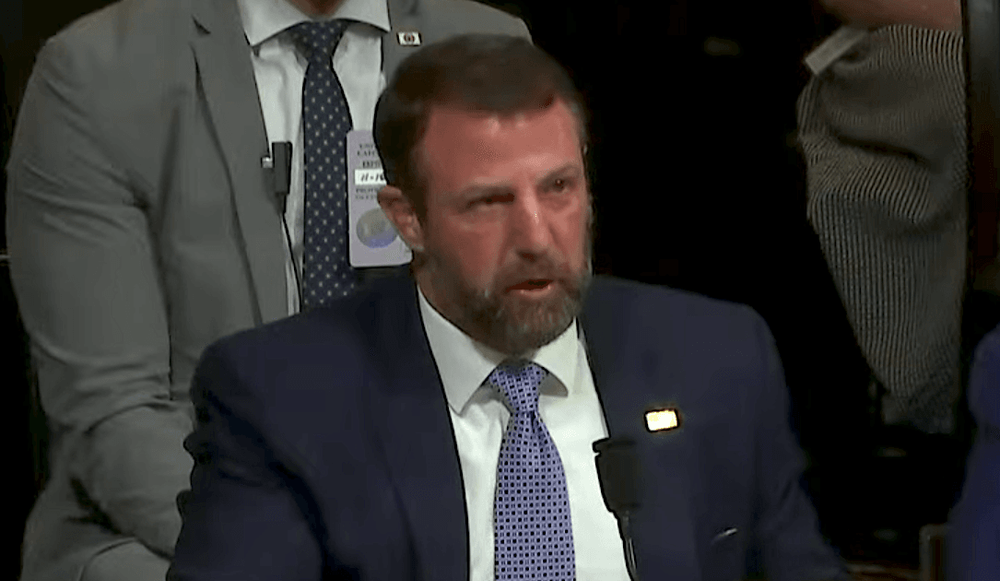
Throughout the panel’s annual worldwide threats hearing, Clayton, along with Homeland Security Secretary Markwayne Mullin and FBI Deputy Director Christopher Raia, sought to address bipartisan concerns, chalking up the interruptions to emerging AI capabilities, aging infrastructure, and increased system patching and upgrades.
Despite the bureau’s cyber teams being involved in the various investigations “from day one,” agents have found no evidence that malicious cyber activity caused the recent failures, according to Raia.
“At this point, there is no indication whatsoever that there is any cyber malicious activity related to any of those incidents.” He later added that the FBI would continue to work with DHS and ODNI “to be to be 120 percent sure.”
Different tone
The administration’s past efforts to assuage the public, especially around the four-hour-long groundstop, have been undercut by Transportation Secretary Sean Duffy and Mullin himself. Each has offered varying explanations for the extraordinary action, including when the DHS chief went on television and said that, based on conversation with unnamed tech executives, AI may have been responsible.
Mullin struck a different note before Congress.
“I'm 98 percent confident that this has nothing to do with our adversaries hacking or going after our system.”
Mullin added that the administration would hold a phone call with representatives from the private sector about informing their customers when an upgrade is coming so they can adequately prepare.
“We're not pressuring the industry to do it. We just want to have a conversation and say maybe we should start communicating because what happens online is a tremendous amount of fear,” he said. “I think all of us can understand it but there's no cause for it.”
Clayton, who on Tuesday explained the outage of an internal NSA network was the result of maintenance related PHP, went the furthest of the trio in offering possible reasons for the rush of technical failures.
“We are in an environment where the rate of patching, the rate of upgrading of systems, is increasing,” he told the panel. “That is the result of advancements in compute and in applications, we should expect that as people are patching, and as people are upgrading systems.”
He noted malicious actors are using such advances to augment their capabilities, including scanning to identify vulnerabilities in systems.
“We need to use the increased compute and the increased capabilities to combat that scanning,” Clayton said. “That has been going on inside a number of our sophisticated financial institutions and others. So we are meeting this threat but it's something that we need to continue to do.”
The spy chief later urged the American people to “understand that we are in the process of upgrading our systems.”
“I'm looking around this room and I'm seeing different systems from many different decades. Some of them are actually a combination of decades,” he said. When you have combinations of old and new equipment on a particular network, that makes upgrades and things like this challenging. We're going to go through this challenge but I think we're going to come out the other side stronger than any country in the world.”



Martin Matishak
is the senior cybersecurity reporter for The Record. Prior to joining Recorded Future News in 2021, he spent more than five years at Politico, where he covered digital and national security developments across Capitol Hill, the Pentagon and the U.S. intelligence community. He previously was a reporter at The Hill, National Journal Group and Inside Washington Publishers.