
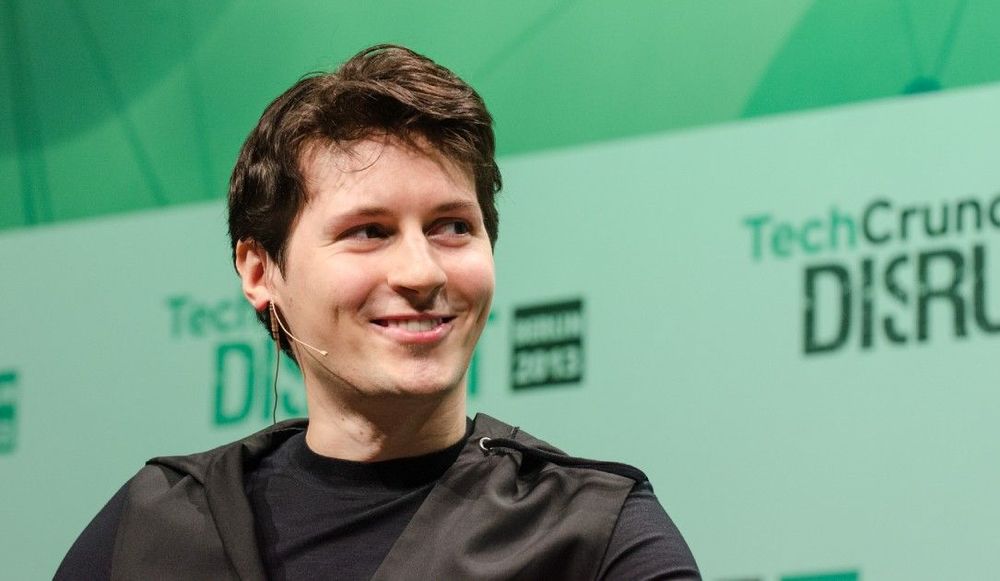
Russian businesses erase Durov-linked products after 'terrorist' designation
Russia's decision to designate Telegram founder Pavel Durov as a terrorist and extremist has produced an unusual side effect: businesses across the country are removing books, films and other products associated with the billionaire, even as Telegram itself remains widely available.
The designation, announced last week, came a day after Russia's Federal Security Service (FSB) charged Durov with aiding terrorist activity and said it would seek to place him on an international wanted list. The agency accused Telegram of failing to remove channels and bots allegedly used by Ukrainian intelligence, as well as terrorist and extremist groups.
Durov rejected the allegations, saying Moscow was retaliating for his refusal to comply with demands for mass surveillance and censorship on Telegram.
"Under Russian law, I'm banned from publishing information on the internet," Durov wrote on Telegram. "Russian officials have clearly got confused about who can ban whom from the internet."
He also posted a meme showing his own photograph labeled "terrorist" alongside an image of Russian Foreign Minister Sergei Lavrov shaking hands with Taliban representatives under the caption "respected partners."
Under Russian law, people added to the list of terrorists and extremists face strict financial restrictions, including frozen assets, limited access to banking services and increased scrutiny from authorities.
Yet the measures have had little visible impact on Telegram itself.
The messaging app remains accessible across Russia despite years of official threats to block it, and Russian state institutions, including the central bank, the Defense Ministry and the Foreign Ministry, continue to publish daily updates through official Telegram channels.
Businesses rush to comply
The most immediate consequences have instead fallen on Russian businesses seeking to comply with laws governing designated individuals.
Russian e-book and audiobook platform LitRes has withdrawn The Durov Code and The Durov Code 2, two biographies of the Telegram founder, from sale. Online retail giants Wildberries and Ozon told state news agency TASS they were reviewing products associated with Durov following his addition to the blacklist.
Ozon said it planned to remove books and merchandise featuring Durov from its marketplace, citing Russian rules requiring companies to review and block sales of materials associated with designated terrorists and extremists.
A tech publication called Durov's Code, which originally focused on Telegram and Durov's projects, rebranded as Kod.ru. Editors said they had been considering the name change for some time as the publication expanded beyond covering Durov, but that recent events accelerated the decision.
Streaming service Kion removed the 2021 documentary Durov from its catalog. Meanwhile, Moscow fertility clinic AltraVita, which offers in vitro fertilization using Durov's donated sperm, added a notice to its website informing patients that he had been placed on Russia's terrorist and extremist register. The clinic's director told Russian media he had not ruled out terminating the clinic's agreement with Durov.
At the same time, Russians can continue using the messaging platform and paying for Telegram Premium subscriptions without violating the law because the restrictions apply to Durov as an individual rather than to Telegram as a company, according to Russia's financial watchdog Rosfinmonitoring.
Mounting international pressure
The Kremlin's actions come as Telegram faces growing scrutiny from regulators outside Russia.
On Tuesday, Apple briefly removed Telegram from its App Store worldwide after receiving a report that a user had shared child sexual abuse material. The app returned after Telegram removed the content and banned the offending account.
"I'm sure this stance will be applied equally to all other apps in the store in the future, right?" Telegram's official account wrote in response to a user who shared Apple's explanation.
In April, Britain's online safety regulator opened an investigation into Telegram over evidence that the platform had allegedly facilitated the sharing of child sexual abuse material. Telegram said it has "virtually eliminated" the public spread of such material through automated detection systems and cooperation with non-governmental organizations.
Durov also remains under investigation in France over allegations that Telegram facilitated the distribution of child sexual abuse material, drug trafficking, fraud and other organized crime. He has denied wrongdoing, describing his detention in France as "absurd" before returning to Dubai in March.
His exact whereabouts remain unclear, although he said he visited Georgia in July.
Durov's future remains uncertain. Despite Moscow's plans to seek his extradition, Russian lawyers interviewed by state news agency TASS said France and the United Arab Emirates are highly unlikely to surrender him because he holds citizenship in both countries.



Daryna Antoniuk
is a reporter for Recorded Future News based in Ukraine. She writes about cybersecurity startups, cyberattacks in Eastern Europe and the state of the cyberwar between Ukraine and Russia. She previously was a tech reporter for Forbes Ukraine. Her work has also been published at Sifted, The Kyiv Independent and The Kyiv Post.