

Exclusive: New data shows increase in FBI searches of Americans’ data last year
The number of searches about Americans conducted by the FBI in a controversial foreign intelligence database rose by roughly 35 percent in 2025, according to a letter by a senior agency official obtained by Recorded Future News.
The number of FBI searches of data collected through the surveillance program known as Section 702 of the Foreign Intelligence Surveillance Act (FISA) between December 2024 to November 2025 rose to 7,413 from 5,518 the previous year, Ted Groves, the acting assistant director of the bureau’s Office of Congressional Affairs, wrote in a March 11 letter to the leaders of the House and Senate Judiciary committees.
The letter does not elaborate on the increase. An FBI spokesperson declined to comment.
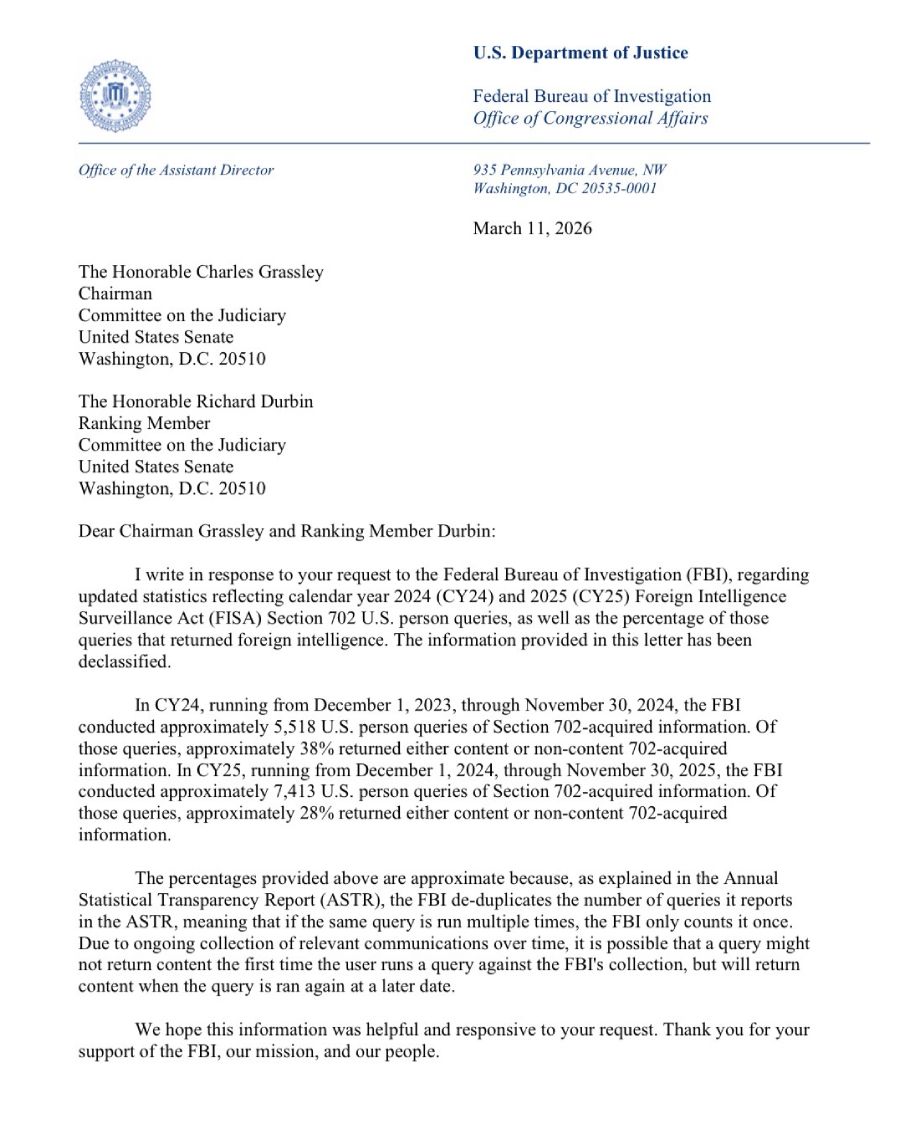
The missive was also sent to the leaders of the House and Senate Intelligence committees, which share jurisdiction over Section 702, earlier this week.
Such FBI searches, referred to as “U.S. person queries,” have been a flashpoint in past congressional debates over the reauthorization of the powerful surveillance tool.
The statute allows the NSA to collect certain categories of foreign intelligence information from international phone calls and emails of terrorism suspects, hackers, foreign spies and other perceived security threats living overseas but also intercepts Americans’ data.
While the law is considered vital to national security by intelligence officials, a coalition of progressive and conservative lawmakers have argued against it because of how it enables some private information belonging to Americans to be collected and searched without a warrant.
The surveillance tool is set to expire on April 20. President Donald Trump has informed top congressional allies that he wants an 18-month “clean” extension of the law.
On Wednesday, FBI Director Kash Patel and CIA Director John Ratcliffe met behind closed doors with Senate Republicans to argue for such an extension, while House Speaker Mike Johnson already stated he will attempt to pass a renewal the week before the sunset date.
However, the newly-disclosed figures could reignite debate over such queries and the need for a warrant. That was the main topic during the last extension debate in 2024 after it was publicly disclosed the FBI used the foreign-spying tool to search for information about defendants in the January 6 attack on the U.S. Capitol, the 2020 George Floyd protests and even a member of the House Intelligence Committee.
The latest number of queries is also a reversal from years of steady, often rapid, decline There were 2,964,643 such searches in 2021. It fell to 119,383 in 2022, then to 57,094 in 2023.
The administration’s letter also notes that in 2024, only 38 percent of queries “returned either content or non-content 702-acquired information.” That percentage shrank to 28 percent in 2025.
It explains the percentages are “approximate,” citing an explanation in the Annual Statistical Transparency Report (ASTR) issued by the Office of the Director of National Intelligence, that the FBI “de-duplicates the number of queries it reports in the ASTR, meaning that if the same query is run multiple times, the FBI only counts it once.”
“Due to ongoing collection of relevant communications over time, it is possible that a query might not return content the first time the user runs a query against the FBI's collection, but will return content when the query is ran again at a later date.”
On Thursday, dozens of progressive and civil liberty advocacy groups sent a letter to congressional Democrats urging them to block renewal of Section 702 without new privacy safeguards, citing its support by Stephen Miller, the controversial White House deputy chief of staff.
“Supporting Stephen Miller’s warrantless surveillance agenda would be a massive detriment to the privacy and civil rights and liberties of people in the United States,” they wrote.



Martin Matishak
is the senior cybersecurity reporter for The Record. Prior to joining Recorded Future News in 2021, he spent more than five years at Politico, where he covered digital and national security developments across Capitol Hill, the Pentagon and the U.S. intelligence community. He previously was a reporter at The Hill, National Journal Group and Inside Washington Publishers.