
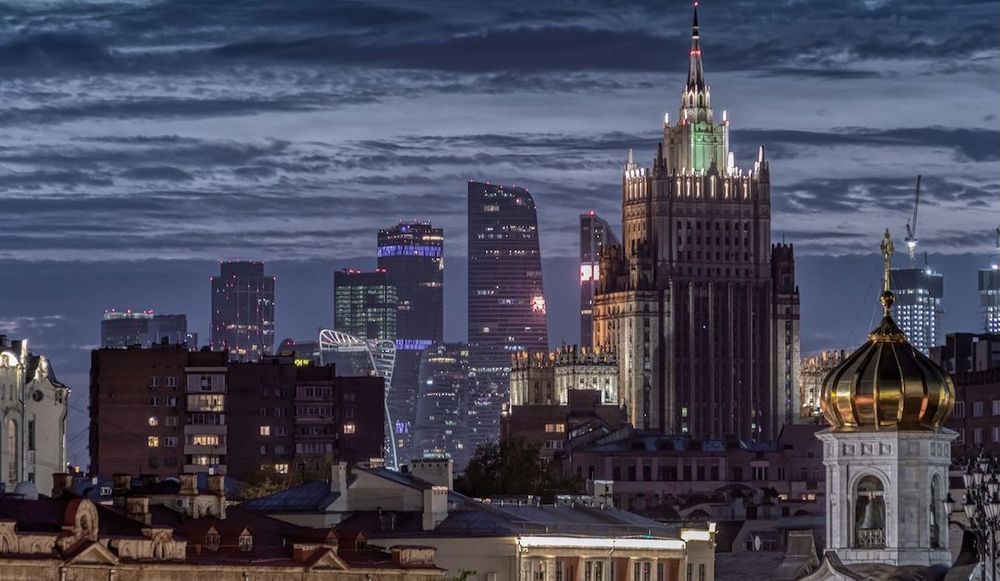
Moscow faces internet disruptions as foreign leaders gather for summits
Russia warned that mobile internet access in central Moscow could be disrupted this week as authorities tighten security ahead of two international summits expected to draw foreign leaders to the capital.
The restrictions will be in place from October 27 to 29, coinciding with the Gas Exporting Countries Forum summit and the Russia-Africa summit, Russia's Ministry of Digital Development said Monday.
Voice calls, Wi-Fi networks and websites on a government-approved list will remain accessible during the disruptions, the ministry said.
The list, known as the internet "whitelist," includes government websites, Russian social media platforms, banks and online marketplaces. Introduced in 2025 amid widespread mobile internet shutdowns, the system allows users to access selected services while much of the wider internet remains unavailable.
The restrictions come as Moscow prepares to host senior officials from several countries, including the presidents of Iran and Equatorial Guinea, the emir of Qatar, the chairman of Libya's Presidential Council and Venezuela's vice president, who are expected to attend the gas exporters' summit.
Representatives from around 50 African countries are also expected to attend the Russia-Africa summit. Russian presidential aide Yuri Ushakov said President Vladimir Putin planned to hold about 20 bilateral meetings with visiting leaders.
Mobile internet shutdowns have become increasingly common across Russia since spring 2025, with authorities citing the threat of Ukrainian drone attacks.
Moscow has experienced similar restrictions during major political events. In May 2025, authorities restricted mobile internet access in the capital and surrounding regions ahead of Victory Day celebrations attended by several foreign leaders. In March 2026, mobile internet service in central Moscow was disrupted for nearly a week, with officials citing security concerns.
Russian internet freedom advocates have questioned the effectiveness of such measures, arguing that drones do not necessarily rely on mobile internet connections to operate. They have suggested that some regional officials may impose sweeping restrictions to demonstrate to the Kremlin that they are taking action against drone threats.
Rights groups say the shutdowns are part of a broader tightening of internet controls since Russia launched its full-scale invasion of Ukraine in February 2022.
According to Human Rights Watch, Russian authorities have blocked thousands of websites, slowed access to YouTube, removed virtual private network (VPN) apps from app stores and banned major Western social media platforms, including Facebook and Instagram.
Russian authorities have also restricted communications and access to social media during protests, elections and other politically sensitive events.



Daryna Antoniuk
is a reporter for Recorded Future News based in Ukraine. She writes about cybersecurity startups, cyberattacks in Eastern Europe and the state of the cyberwar between Ukraine and Russia. She previously was a tech reporter for Forbes Ukraine. Her work has also been published at Sifted, The Kyiv Independent and The Kyiv Post.