
US indicts Malaysian national after Madagascar scam operation uncovered
The Justice Department said it disrupted a Madagascar-based scam operation that allegedly stole hundreds of thousands from Americans through fictitious NFT investment schemes.
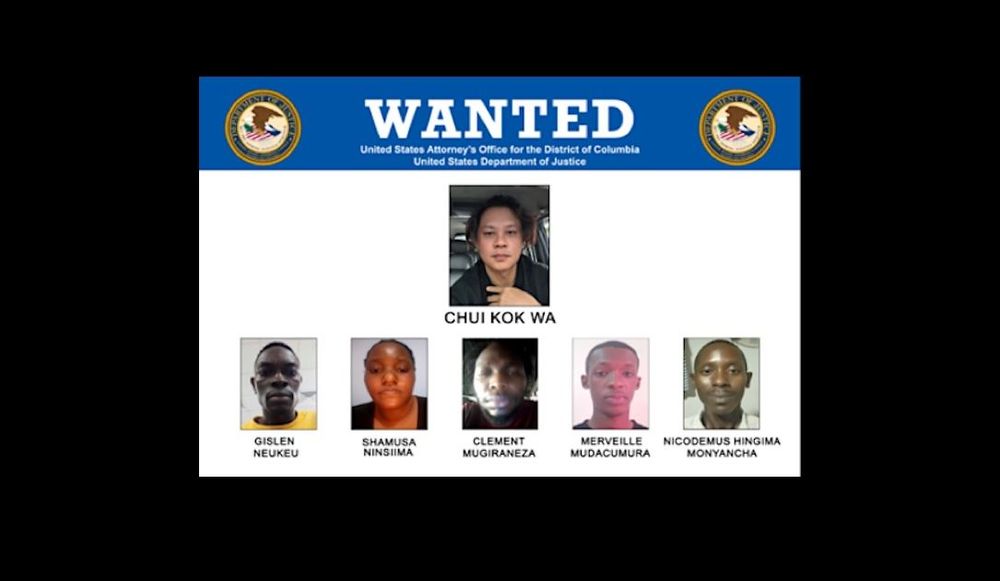
On Tuesday, prosecutors announced indictments of Malaysian national Chui Kok Wa and five others for their role in stealing more than $516,695 from 74 cryptocurrency wallets associated with victims in Maryland, Oregon, Nevada, Minnesota and other states.
The indictment said Wa worked with accomplices in China in coordinating and funding the scheme, which allegedly moved to Madagascar last year after law enforcement takedowns in Cambodia.
An FBI unit went to Madagascar in August and gained access to more than 3,000 devices, prosecutors said. The sting revealed the detailed inner-workings of the operation and provided concrete links between incident reports filed by victims in the U.S. and scammers conducting the scheme from compounds in the country’s capital, Antananarivo.
The Justice Department noted that during the trip, its officers went to 13 scam compounds with the Madagascar National Police (MNP) but were “stymied” when they tried to interview suspects.
“Madagascar repatriated to China numerous suspects before the investigation was complete,” the Justice Department said. The U.S. has “called on the Madagascar government to cooperate with the United States, extradite the six charged defendants, and further noted that the government had obtained a material witness warrant to interview 15 employees of the scheme, who claimed they were human trafficked and abused by Wa, but are believed to be held in jail in Madagascar.”
The Madagascar Ministry of Justice did not respond to requests for comment but has repeatedly touted its work with China over the last three months in extraditing hundreds of Chinese nationals accused of being involved in scam centers. At least 49 Chinese nationals were reportedly extradited on Monday.
The indictment adds that Madagascar law enforcement agencies arrested 400 people, including 40 Chinese leaders of the operation. But the FBI was not allowed to interview the leaders before they were repatriated to China or simply released.
It is unclear whether Wa and the five co-conspirators are still in Madagascar. The Justice Department did not respond to requests for comment.
The indictment notes that FBI agents and investigators have struggled to separate human trafficking victims from others who were paid to conduct the scams.
Several of those currently being held in Madagascar jails claim they are human trafficking victims but information obtained from scam center devices showed they were paid and had employment contracts — something the FBI had not seen with human trafficking victims forced to conduct scam operations.
During the Madagascar trip, FBI agents interviewed three Brazilian nationals who said they responded to work ads online before ending up at scam compounds in Cambodia. Due to the war between Cambodia and Thailand, the witnesses were moved to Antananarivo, Madagascar, in May 2026.
The indictment warns that several other victims said scam centers are being moved to African countries now that there is increased law enforcement focus on Southeast Asia.
NFT schemes
The indictment said Wa led a group of about 20 that lured victims in through dating sites before getting them to invest in fake nonfungible tokens (NFTs).
Of those 20, five were indicted alongside Wa including Gislen Neukeu, Shamusa Ninsiima, Clement Mugiraneza, Merveille Mudacumura and Nicodemus Monyancha. The five are from Cameroon, Rwanda, Kenya and Uganda.
Contracts obtained from Wa showed his workers were paid $900 per month to scam people and were paid percentages of the amount they were able to get out of victims. They worked overnight hours in Madagascar to match daytime hours in the U.S.
The scammers posed as beautiful women and asked victims to connect their cryptocurrency wallets to fraudulent websites. Victims were pushed to continue adding funds to the wallets as the scammers siphoned more and more funds from them. Wa provided them with scripts listing fake scenarios and pictures that could be sent to victims.
The stolen funds were transferred to wallets controlled by Wa on platforms like Binance before they were sent to other accounts owned by people based in China.
The DOJ said it took down several of the websites used by the scammers to portray the NFT investment scheme as legitimate. Blockchain experts at Chainalysis and cryptocurrency platforms like Tether worked with the DOJ to trace the stolen funds.
The indictments are the latest actions taken by the DOJ’s Scam Center Strike Force, which is led by Assistant U.S. Attorney Karen Seifert. The DOJ noted that it has seized thousands of dollars and Starlink terminals from raids at various locations across Southeast Asia and Africa.
The U.S. government estimates that about $8.65 billion was stolen from Americans in 2025 through scam compounds. A recent Congressional report found that dating sites are key cogs in the scam economy and have become the initial contact point for cybercriminals before interactions are moved to traditional messaging apps.



Jonathan Greig
is a Breaking News Reporter at Recorded Future News. Jonathan has worked across the globe as a journalist since 2014. Before moving back to New York City, he worked for news outlets in South Africa, Jordan and Cambodia. He previously covered cybersecurity at ZDNet and TechRepublic.