
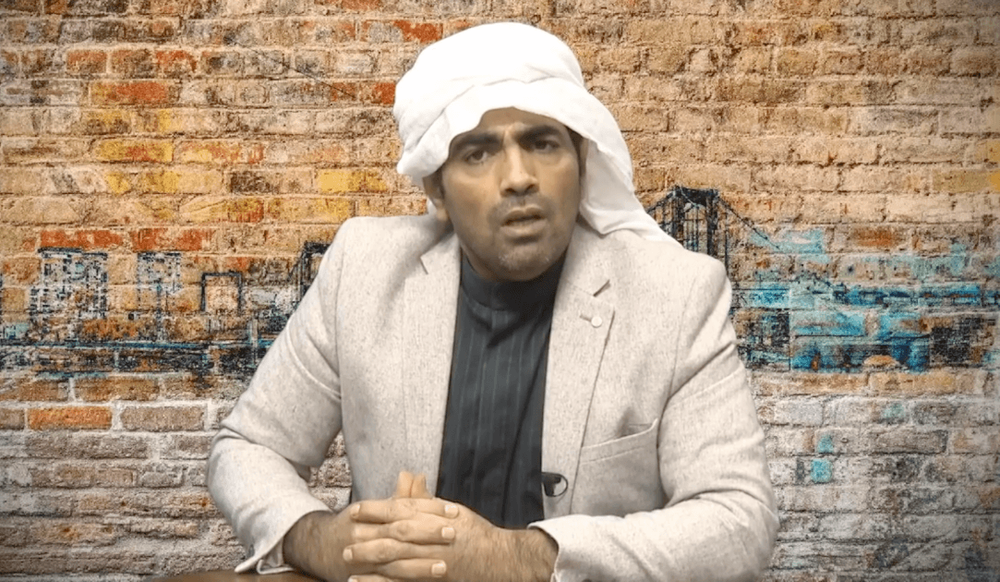
Judge awards British critic of Saudis $4.1 million, finds the regime hacked his devices
A London-based critic of the Saudi regime who claimed authorities there hacked his phones with sophisticated spyware has won a court case against the kingdom and was awarded more than £3 million ($4.1 million) in damages.
There is a “compelling basis” for concluding that Ghanem Al-Masarir’s iPhones “were hacked by Pegasus spyware which resulted in the exfiltration of data from those mobile phones and that this conduct was directed or authorised by the KSA [Kingdom of Saudi Arabia] or agents acting on its behalf,” said the ruling Monday in the U.K. from Judge Pushpinder Saini.
Al-Masarir, 45, has long criticized the Saudi government and had alleged that it hacked two of his phones with Pegasus in June 2018. He also alleged that the regime arranged a 2018 beating in which he sustained eye injuries.
Saini entered a summary judgment against Saudi Arabia, which he said has not entered a defense in the case or “engaged in any way with these proceedings” since 2023.
“The obvious inference is that the KSA used Pegasus to monitor him over an extended period and by multiple acts,” the judge said.
Al-Masarir’s YouTube videos criticizing the Saudi regime have been viewed 345 million times, making him an enemy of a regime that has gone to extreme lengths to silence critics, including by murdering Jamal Khashoggi, a journalist who was slain in the kingdom's Turkish embassy in October 2018.
Saini cited evidence from digital forensic researcher Bill Marczak of The Citizen Lab to justify the ruling.
Marczak identified text messages on Al-Masarir’s phones that he said were used to install Pegasus and attributed the infections to the KSA.
Al-Masarir said that the hacking of his devices allowed the Saudis to track his location, access all data stored on his phones, use his microphones to record him and turn on the phones’ cameras.
The Saudi Embassy in London did not immediately respond to a request for comment.
No longer posting
Al-Masarir has suffered “severe psychiatric injury” as a result of the hacks, the judge said, and no longer produces YouTube videos on his “Ghanem Show” channel as a result. More than £2.6 million ($3.5 million) of the damages were for loss of income.
The judge said the hacking constitutes “exceptionally grave invasions” of Al-Masarir’s privacy.
Saudi Arabia “effectively converted these smartphones into ‘bugging’ devices which secretly transmitted huge amounts of his data and information on every aspect of his life to a hostile state,” the ruling said.
In addition to the hacks, Al-Masarir was followed and beaten by two men who accused him of being a “slave of Qatar.” Saudi Arabia has a poor relationship with Qatar. The Saudis likely ordered the attack, the ruling said.
“The KSA had a clear interest in and motivation to shut down” Al-Masarir’s public criticism of the government, the ruling said.
In granting summary judgment, Saini concluded that Saudi Arabia has “no reasonable prospect of contesting” the allegations.
“Entering summary judgment at this stage is the only course consistent with the overriding
objective when a trial would simply be a rehearsal of all the evidence before me without
challenge from the KSA,” the ruling said.
In 2022, Saudi Arabia had argued that it should not be held responsible for the attacks, claiming state immunity. That claim was denied at the time and the Saudis stopped engaging with the court thereafter.



Suzanne Smalley
is a reporter covering digital privacy, surveillance technologies and cybersecurity policy for The Record. She was previously a cybersecurity reporter at CyberScoop. Earlier in her career Suzanne covered the Boston Police Department for the Boston Globe and two presidential campaign cycles for Newsweek. She lives in Washington with her husband and three children.