
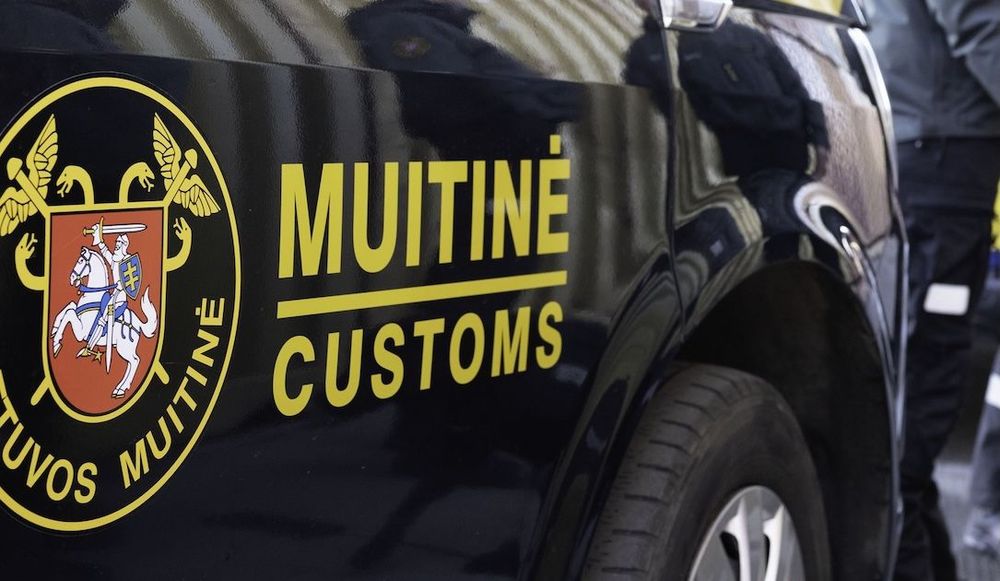
Lithuanian customs agency restores services after cyberattack, possible data breach
Lithuania's customs agency said Monday it had partially restored its online services following a cyberattack last week that may have exposed the personal information of hundreds of individuals and businesses.
The attack, detected on November 10, prompted Lithuanian Customs to temporarily shut down its main user management portal, known as BAP, which individuals and businesses use to access customs services and certain European Commission systems.
The shutdown disrupted access to several EU customs platforms, including systems used to process import declarations and verify the customs status of goods.
The agency said Monday that some of the affected services were back online and accessible through Lithuania's electronic government portal, although users still could not log in using digital certificates.
Lithuanian Customs said its investigation had confirmed unauthorized access to BAP and identified a potential data breach affecting users who logged in on November 9-10.
The agency's chief, Vygantas Paigozinas, told Lithuanian public broadcaster LRT on Friday that preliminary findings suggested the hackers had attempted to gain access to other government systems containing more sensitive information and potentially damage the agency's IT infrastructure.
"All indications suggest that the attackers attempted to cause much greater damage and penetrate deeper into the information system's various components, which store significantly larger volumes of more sensitive data," Paigozinas said.
According to Paigozinas, several hundred individuals and businesses, most of them based in Lithuania, may have been affected. However, he cautioned that being identified as a potential victim did not necessarily mean their information had been accessed, copied or stolen.
Local media reported that the potentially exposed information included names, home addresses, phone numbers, email addresses and Lithuanian personal identification numbers.
Paigozinas described the incident as a targeted, sophisticated attack, saying preliminary evidence suggested the hackers may have exploited a poorly secured technical function.
Authorities have not identified the attackers or disclosed the specific vulnerability used to gain access.
The disruption affected several European Commission customs systems, including the Import Control System 2 (ICS2), which collects and assesses information about goods entering the European Union.
The restrictions imposed on the system primarily affected individuals and smaller businesses that rely on BAP to log in to other customs systems. Services used by customs intermediaries continued operating normally.
Lithuanian Customs said it had notified the country's cybersecurity and data protection authorities, along with relevant EU institutions, about the incident.
The attack follows a separate breach of Lithuania's state registry systems in May, when unidentified hackers gained unauthorized access to more than 600,000 records held by the Centre of Registers, which manages the country's property and corporate registries.
That breach potentially exposed sensitive personal and property information from Lithuania's Real Estate and Legal Entities Registers. There is no publicly established connection between the two incidents.



Daryna Antoniuk
is a reporter for Recorded Future News based in Ukraine. She writes about cybersecurity startups, cyberattacks in Eastern Europe and the state of the cyberwar between Ukraine and Russia. She previously was a tech reporter for Forbes Ukraine. Her work has also been published at Sifted, The Kyiv Independent and The Kyiv Post.