
Where the backlash against Flock Safety is having the biggest impact
Increasingly fervent community protests and reports of police abuse have led a surging number of jurisdictions to cut ties with the commercial surveillance firm Flock Safety.
Momentum has been building for more than a year, with cities like Austin, Texas; Cambridge, Massachusetts; and Eugene, Oregon already having ended contracts with Flock. But recent weeks have seen the issue approach a tipping point, with the state governments of Texas and Florida significantly restricting Flock use in the past two weeks.
It’s not just big cities and states that are walking away from the company. An analysis by the digital rights nonprofit Secure Justice shows that more than 90 cities and counties nationwide terminated Flock contracts in the month of August alone. Since 2021, Secure Justice has tracked more than 200 municipal Flock contract terminations, underscoring the significance of the August uptick.
“The backlash is definitely gaining momentum,” said Jake Laperruque, a surveillance expert at the Center for Democracy and Technology. “It certainly has caught fire and has become kind of a quintessential issue to people of ‘these are surveillance technologies and powers that are really scary and dangerous in what they can do and there aren't basic safeguards.’”
Florida
On August 31, the Florida Department of Transportation announced it is barring the use of all automated license plate readers (ALPRs), including those manufactured by Flock Safety, on state highways.
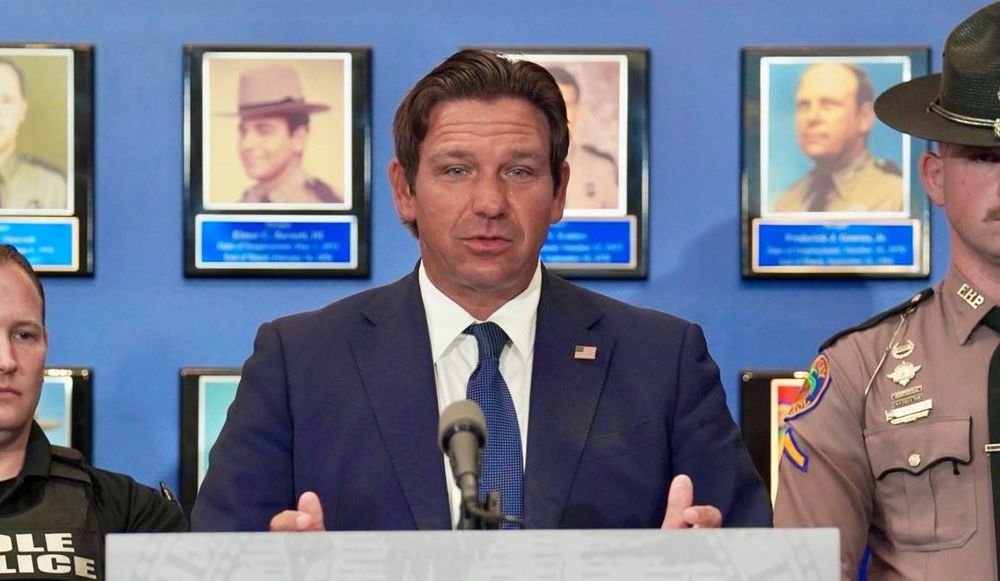
A few days earlier Gov. Ron DeSantis, a Republican, slammed ALPRs, saying they violate citizens’ privacy.
"If you want to get in your car and you want to go down to Buc-ee's in St. Augustine, it's really none of the government's damn business if you're doing that, right?” DeSantis said. “What we don't want in the state of Florida is to have a digital AI surveillance state where everything we're doing is being tracked at all times.”
Several Florida sheriffs have terminated Flock contracts since DeSantis’s comments, with many electing to stop using Flock cameras everywhere and not just on highways.
Texas
Gov. Greg Abbott, a Republican, blocked state agencies from using public monies to fund Flock cameras on Aug. 28. The decision came on the eve of publication of a Texas Tribune report showing that a state agency had secretly siphoned $30 million from a state tax on car insurance to pay for a sprawling network of Flock cameras.
“There is a crackdown across Texas,” Abbott press secretary Andrew Mahaleris said in an email. “In Lufkin, a police officer was indicted on 100 felony charges for misuse of Flock information. Other criminal investigations are underway in other communities.”
El Paso and several smaller cities and counties have terminated their Flock contracts since Abbott’s order.
An increasingly organized opposition movement against the tech has flourished in Texas.
“You promised to protect us, but we see the abuse has come and there’s still no protections. We need to eliminate Flock,” Christopher Rivera, a member of the Texas Civil Rights Project, told local politicians late last month.
Los Angeles
In July, the Los Angeles Police Department (LAPD) announced it would not renew its contract with Flock, saying it objected to contract terms giving the company ownership of data collected there.
The decision followed the publication of an audit by a city inspector general alleging that in just a two-month period, the department probed 161 car owners whose vehicles Flock mistakenly flagged as stolen.
Officials also cited concerns about privacy and data protection.
“The sticking point is around having very clear terms about who owns the data, what happens with the data once they collect it,” LAPD Chief Information Officer Dean Gialamas said at the time.
The department continues to negotiate with Flock and no deal has been reached, an LAPD spokesperson said Friday.
In July, the Board of Police Commissioners voted to require public input and a Police Commission vote to approve any new ALPR contracts.
Atlanta
On August 17, Mayor Andre Dickens, a Democrat, ordered city officials to conduct a 30-day review of Flock cameras and how they are used across the city.
A senior city official reportedly told the city council in a memo that the review will probe system use and compliance, policies and “corrective action and policy strengthening.”
The move follows news of several recent instances of police abuse of the surveillance system, including by eight officers in DeKalb County, which covers part of Atlanta.
Hundreds of protestors came to Atlanta to protest outside of the company’s Flock Forward annual conference in mid-August, according to local news reports.
The privacy watchdog DeFlock has said that 30 Flock protests were planned across Georgia during the week of the conference. Flock is based in Atlanta.
There have been several reports of Flock cameras being destroyed by residents opposing the surveillance system across metro Atlanta.
The Atlanta metro area reportedly has about 5,000 of the ALPR cameras in operation.



Suzanne Smalley
is a reporter covering digital privacy, surveillance technologies and cybersecurity policy for The Record. She was previously a cybersecurity reporter at CyberScoop. Earlier in her career Suzanne covered the Boston Police Department for the Boston Globe and two presidential campaign cycles for Newsweek. She lives in Washington with her husband and three children.