
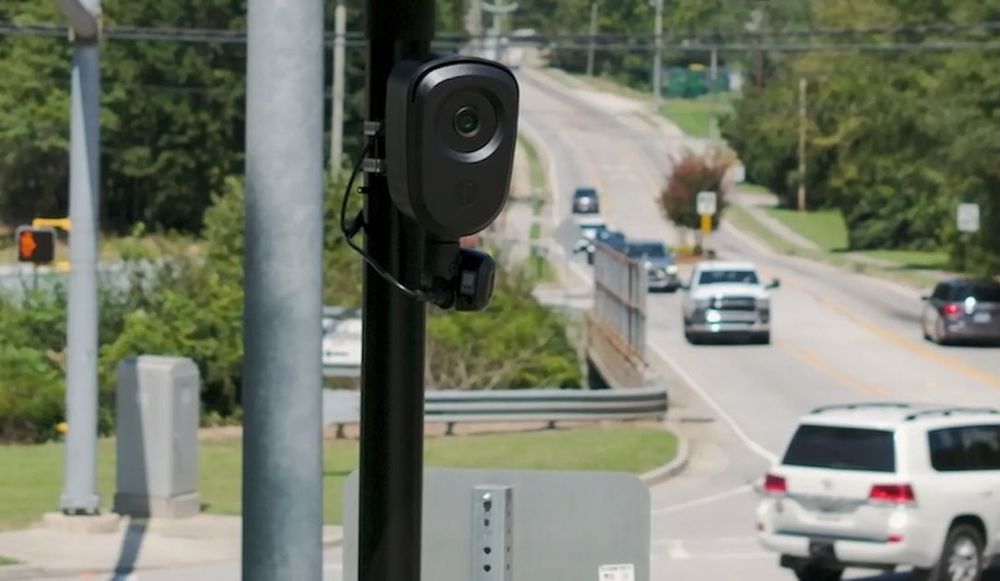
Flock tightens privacy controls amid scandals over officer abuse
The controversial license plate reader company Flock Safety is changing some of its policies to address the abuse of its technology by law enforcement officers amid growing backlash nationwide to the rapid spread of its cameras.
The company announced Thursday that it would expand its “Audit Assistance” feature, which tracks abnormal activity within departments using its technology and flags it for review. All customers will now be required to adopt the auditing feature by the end of the year, and a user’s account will be automatically suspended while a review of activity takes place.
Flock also will require officers to input case codes connected to an investigation when they conduct a search — a feature that since it was rolled out in July 2025 has been optional. The requirement can be bypassed in emergencies.
The tightening of its protections follows revelations that officers nationwide have used Flock’s license plate readers to track people for personal reasons.
Earlier this week, a police officer in New Bedford, Massachusetts, was accused in court of using the technology to stalk their ex-girlfriend, and three sheriff’s deputies in Georgia were arrested for similar offenses. A Washington Post investigation earlier this month found that at least 50 law enforcement officers have been charged with misusing Flock’s tools.
The company touted the new measures as a “continuation of our commitment to both safety and privacy” but Chad Marlow, senior policy counsel at the American Civil Liberties’ Union, dismissed the announcement as largely a public relations stunt.
He praised a proposed change to shrink the amount of time data is held from license plate searches from 30 to seven days — except in cases where it is kept as evidence in an investigation — as a potentially positive step, but said several others “are merely retreads of previous inadequate safety measures.”
The new rules attempt to allay concerns about the vast troves of information the cameras collect, which can be accessed across jurisdictions.
The company said clients can now limit the circumstances under which they share information from their cameras with other agencies, for example allowing a search of their database in the case of a missing person investigation but not in connection with immigration enforcement.
It was unclear from the announcement how an officer conducting an inquiry would be prevented from abusing this system by lying about the reason for a search. In a blog post, the ACLU’s Marlow said the measure is not new and failed previously “because users were easily able to circumvent the system’s requirement that police input the purpose of their search.”
Founded just 10 years ago in Atlanta, Georgia, Flock has inked contracts with more than 7,000 organizations across the country and built out a network of some 120,000 license plate readers. Its surveillance web has stoked widespread opposition, however, from people and civil liberties groups who fear it is eroding the right to privacy.
The outcry has led to the cancellation of contracts with the company in largely liberal cities like Los Angeles, Cambridge, Massachusetts, and Eugene, Oregon.



James Reddick
has worked as a journalist around the world, including in Lebanon and in Cambodia, where he was Deputy Managing Editor of The Phnom Penh Post. He is also a radio and podcast producer for outlets like Snap Judgment.