
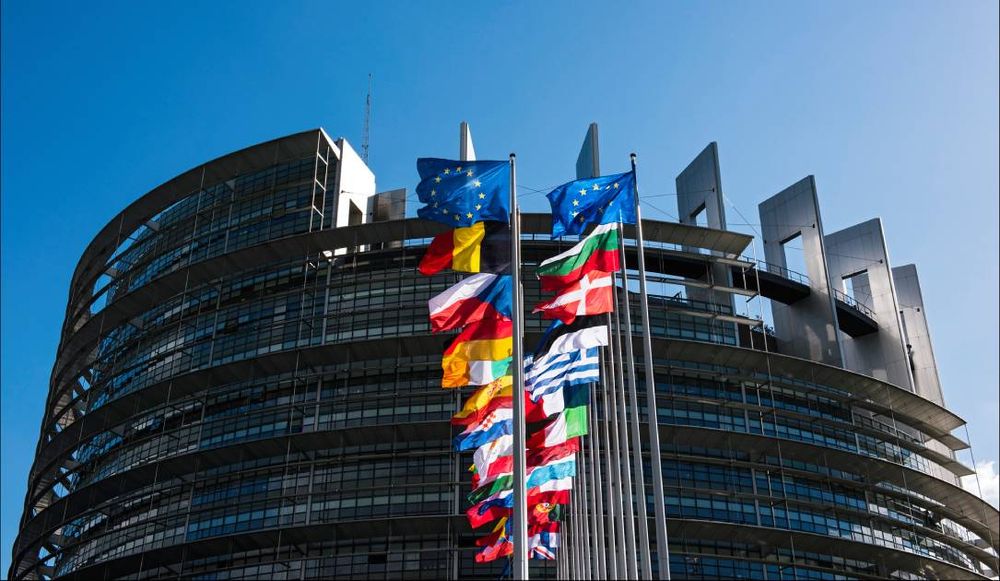
European leaders unveil tentative deal for AI Act simplification, including a ban on nudification tools
European lawmakers on Thursday forged a tentative agreement that will ban artificial intelligence nudification tools while significantly delaying implementation of key provisions of the EU’s landmark AI Act.
The agreement still requires formal approval from EU countries and the European Parliament, a process that is expected to conclude by August.
The AI Act became legally binding in August 2024, but aspects of the law were slated to be implemented at a later date. Businesses complained loudly that the law was overly burdensome and would hinder the bloc as it competes with global superpowers, sparking an effort by lawmakers to simplify the legislation.
The tentative deal responds to industry criticism by postponing enforcement of rules governing so-called “high-risk” AI tools involving biometrics and those used in employment, law enforcement and critical infrastructure to December 2027, according to a European Parliament press release. The provision was initially slated to take effect in August.
The new version of the legislation also allows personal data to be processed in cases where it is necessary to “detect and correct biases” and narrows the number of businesses the AI Act applies to by granting exemptions to include mid-cap enterprises.
The decision to ban AI that creates sexually explicit images of individuals without their consent greenlights a provision that was first proposed after Elon Musk’s Grok chatbot began publishing millions of nudified images of unwitting victims in December. The ban will take effect on December 2.
Parliamentarian Michael McNamara, who represents a key committee, said in a statement that the agreement will give lawmakers “the tools to act if providers do not address AI systems that compromise fundamental rights or human dignity.”
A second lawmaker, Arba Kokalari, of Parliament’s Internal Market and Consumer Protection committee, said in a statement that the deal makes AI rules “more workable in practice, remove overlaps and pause the high-risk requirements.”
“In order for Europe to become an AI continent, we need to promote innovation, support startups and scaleups and make it easier to build AI in Europe.”
The tentative agreement is the culmination of an intense period of negotiations. In March, the European Council unveiled its proposal for streamlining the AI Act, which added the nudification language.
Critics said the deal does not go far enough.
While hailing aspects of the deal, the Computer and Communications Industry Association said in a press release that it “falls short.”
“It misses a clear opportunity to deliver genuine simplification in key areas… including the removal of the requirement for AI systems deemed ‘non-high-risk’ to be registered in an EU database,” the press release said.



Suzanne Smalley
is a reporter covering digital privacy, surveillance technologies and cybersecurity policy for The Record. She was previously a cybersecurity reporter at CyberScoop. Earlier in her career Suzanne covered the Boston Police Department for the Boston Globe and two presidential campaign cycles for Newsweek. She lives in Washington with her husband and three children.