
European Commission set to push social media restrictions, safety requirements into law
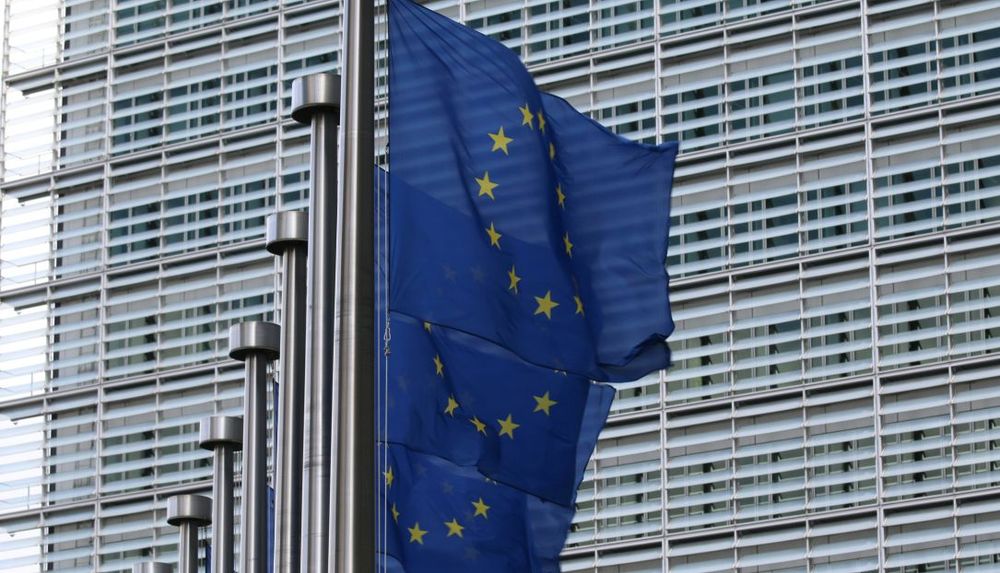
The European Commission (EC) on Thursday laid out a detailed roadmap for a proposal to bar children younger than 13 from accessing social media and mandate that platforms improve their design to better protect minors.
The announcement comes as countries worldwide — including Australia, Spain, France, China, Turkey and the UK — have either implemented similar bans or have indicated they plan to amid growing concerns about how the technology affects kids.
The proposal, known as the EU KIDS Act, would block social media platforms from offering accounts to children younger than 13 and establish a bloc-wide minimum age of 15 for account creation.
Children between 13 and 15 will only be able to access social media platforms if their guardians create “mini accounts” their kids can access through their parents’ accounts, according to an EC press release. The mini accounts will be regulated strictly, the press release said, and services will be required to limit social contacts and cap screen time to an hour a day.
Children under 13 will be entirely blocked from social media outside of parent-controlled tools designed to limit the use of the adult’s device to child-friendly video-sharing services. The onus will be on providers to create the tool and ensure it is simple to use, the press release said.
The proposal will not become law until EC officials win support from the European Parliament and member states. European countries have been broadly supportive of social media bans for young teens, giving the proposal a significant chance of being enacted.
“Today, our children are engaging with the most sophisticated technologies ever created,” Commission President Ursula von der Leyen said late Wednesday in a speech previewing the proposal. “Technology that was never created with their wellbeing in mind.”
Safe by design
Service providers will generally be directed to prove that their offerings are safe by design and appropriate for children, the press release said.
The KIDS Act proposal includes several restrictions for children under 18 using social media, online games, video sharing services and AI chatbots and companions.
Safe by design requirements include a ban on what the commission calls “addictive features and profiling-based recommender feeds dragging minors into ‘rabbit holes' of harmful content.”
The proposal also would ban online services from using “infinite scroll without stopping points, reward tricks and push notifications during sleeping hours, as well as unsolicited contact from strangers,” the press release said.
It also mandates that AI companions and chatbots be turned off by default and requires them to create protocols to keep their products from simulating relationships “in ways that create emotional dependency,” the press release said.
Minors’ profiles will need to be kept private by default, the release said, with geolocation, microphone and camera access blocked. Providers will be required to give teens a simple method for blocking and muting users as well as “safe recommender” systems that minors can reset or otherwise control.
The EC says the KIDS Act will ensure children’s privacy is protected by requiring online services and app stores to deploy an EU age verification app that was unveiled in April. The app does not store identity documents or biometric data and meets the “highest privacy-preserving safeguards,” the release said.
In addition, providers of social media services and video-sharing platforms will be required to deploy age verification tools when a user opens a new account and estimate ages for existing accounts based on account creation date, credit card information and similar methods.
Enforcement plans — and challenges
The KIDS Act will require “very large” providers to submit a “compliance plan” to the EC and a third-party auditor charged with reviewing the companies’ programs for protecting kids online. The EC will review auditor reports and ask providers’ to address deficits when audits reveal lapses, the press release said.
The EC emphasized that enforcement will be made easier because the continent’s Digital Services Act and the Artificial Intelligence Act have already mandated restrictions that give a foundation to build from.
In cases where companies are suspected to be in violation of the KIDS Act, the commission said it will accelerate investigations and ensure they end within 90 days.
Online providers who are found to be in violation of the KIDS Act could be fined as much as 6% of their global annual sales, the EC said. Providers also will be required to bankroll regulators’ oversight by paying a fee.
Enforcement of social media bans has proven hard, with researchers retained by the Australian government finding that the country’s ban hasn’t stopped 61% of Australian children between the ages of 12 and 15 from accessing accounts on major platforms.
On September 7, Australia’s Parliament passed a law that doubles maximum fines for tech platforms that don’t comply to AU$99 million ($68 million) and beefs up investigative authorities for the Australian regulator, the eSafety Commissioner.
“The technological state of the art, including with VPNs and age assurance technologies and the extent to which privacy issues are engaged due to the collection of data, will pose complications for lawmakers and, eventually, those implementing, overseeing and enforcing the law,” Joe Jones, director of research and insights from the IAPP, which does not take a formal position on the ban, said via email.
Fierce Backlash
Tech lobbyists and privacy and digital freedoms advocates were quick to denounce the plan.
The proposal doesn’t set the technical, security, or accreditation standards for KIDS Act implementation, according to Mitchell Rutledge, CCIA Europe’s technology and security policy manager.
“The Commission is kicking those critical decisions down the road to future implementing and delegated acts,” Rutledge said via email. “Europeans are essentially being asked to trust a system before anyone knows how it’s actually going to be built.”
Digital freedoms advocates said the proposal is dangerous and imperils the privacy of all Europeans.
“If the EU really wants to protect children, it should make platforms prove that they are safe, not make children and everyone else prove that they are old enough to exercise their fundamental rights online,” Simeon de Brouwer, policy advisor at European Digital Rights (EDRi), Europe's largest network of digital rights organizations, said via email.
Because the KIDS Act mandates all users' ages be verified when they create social media accounts, adults will have to submit ID documents and smartphones, de Brouwer said.
Mobile devices are needed to use the EU age verification app and European ID wallets, he said.
DeBrouwer said the requirement will be particularly harmful for marginalized people who don’t have IDs and will strip kids of their rights.
Greta Thunberg could not have launched her global climate change campaign without access to online services, he said.
The European Commission included poll numbers showing strong support for more aggressive kids online safety laws in its press release, saying that the Special Eurobarometer on the Digital Decade 2026 survey found that 92% of Europeans consider better kids online safety protections a “top policy priority.”



Suzanne Smalley
is a reporter covering digital privacy, surveillance technologies and cybersecurity policy for The Record. She was previously a cybersecurity reporter at CyberScoop. Earlier in her career Suzanne covered the Boston Police Department for the Boston Globe and two presidential campaign cycles for Newsweek. She lives in Washington with her husband and three children.