
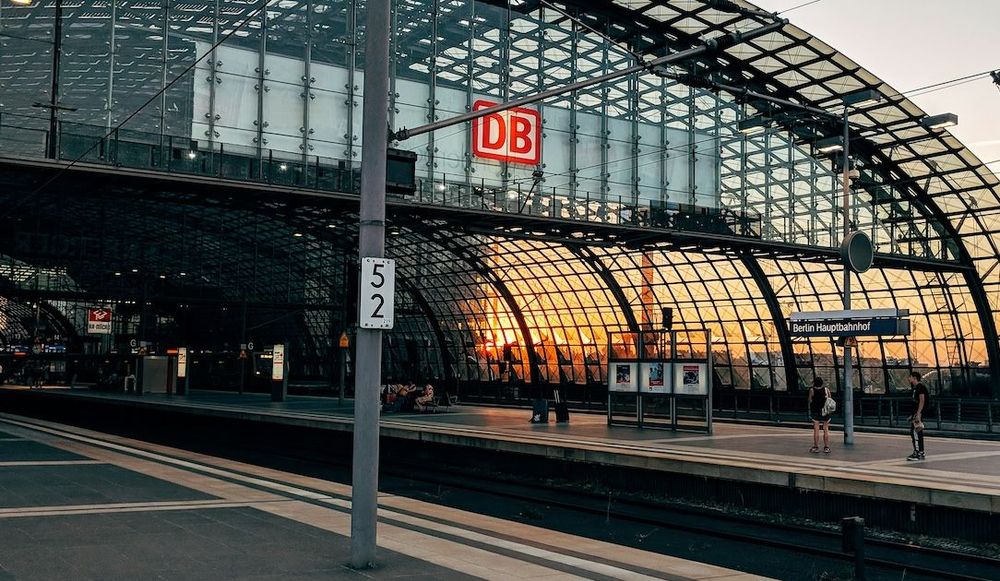
German rail services resume after wireless communications outage
Germany's state-owned rail operator Deutsche Bahn restored train services early Wednesday after a technical failure in its railway communications network brought rail traffic across the country to a standstill for roughly two hours overnight, disrupting both long-distance and regional services.
The outage, which began late Tuesday, halted trains nationwide and also affected S-Bahn commuter services connecting major cities with surrounding suburbs. While services resumed Wednesday morning, Deutsche Bahn warned passengers to expect lingering delays and cancellations.
"Our IT experts worked tirelessly to resolve the issue — successfully," the company said in a statement. "The disruption was quickly fixed, and service is now gradually resuming."
Deutsche Bahn said the incident stemmed from a malfunction in its GSM-R digital railway radio system, a critical communications network used by train drivers, dispatchers, and signaling systems to coordinate rail operations safely.
Philipp Nagl, chief executive of Deutsche Bahn's infrastructure subsidiary, said the disruption occurred during a scheduled replacement of a technical component.
"The cause of yesterday's disruption to the GSM-R digital railway radio system was the scheduled replacement of a technical component. We are now analyzing the exact cause of the disruption," Nagl said.
The company has not indicated that the incident was the result of a cyberattack and has so far described it as a technical failure.
GSM-R, or Global System for Mobile Communications–Railway, is a specialized wireless communications standard widely used by European rail operators. Built on aging 2G technology, the system is gradually being phased out in favor of a next-generation railway communications platform based on 5G technology, although the transition is expected to take years.
Germany is not the only country to experience disruptions linked to GSM-R failures. A fault in the same communications system disrupted train services across southern England in May, while a nationwide GSM-R outage in Britain in 2024 caused widespread delays and cancellations during the morning commute.
Deutsche Bahn, which carries more than 5 million passengers daily across a network spanning roughly 33,400 kilometers and 5,400 stations, apologized to travelers affected by the outage. The company said it would provide hotel and taxi vouchers where necessary and arrange alternative transportation when possible.



Daryna Antoniuk
is a reporter for Recorded Future News based in Ukraine. She writes about cybersecurity startups, cyberattacks in Eastern Europe and the state of the cyberwar between Ukraine and Russia. She previously was a tech reporter for Forbes Ukraine. Her work has also been published at Sifted, The Kyiv Independent and The Kyiv Post.