
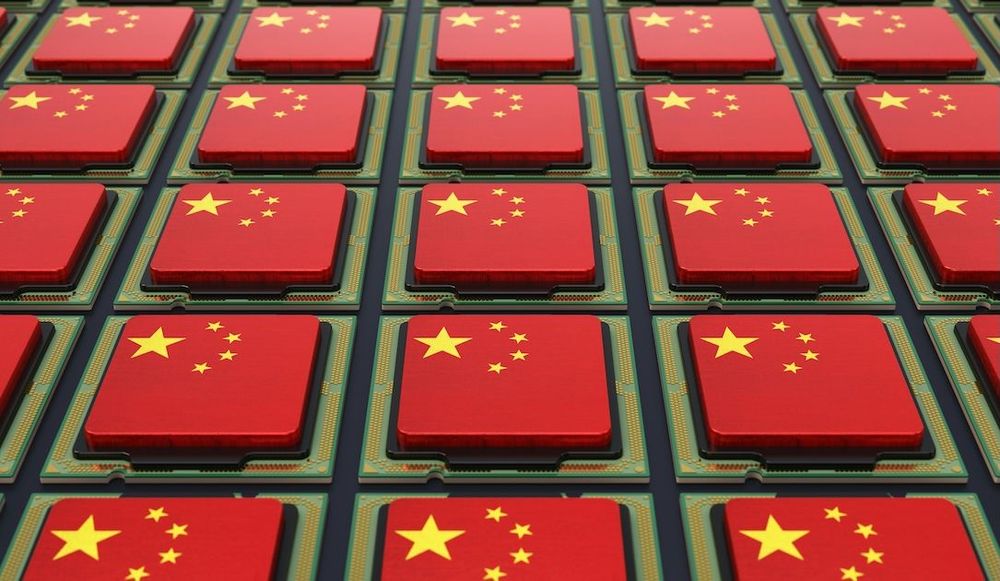
Chinese prosecutors raise alarm about growth of domestic IP theft
A senior official at China’s top prosecutorial agency said that Beijing is stepping up criminal enforcement against commercial espionage and technology leaks to protect domestic innovation.
Liu Taizong, deputy director-general of the intellectual property department at the country’s top prosecutorial agency, said on Tuesday that prosecutors nationwide are increasing cases involving alleged theft of trade secrets and key technologies, as reported by state media.
From 2021 through 2024, authorities handled more than 1,200 business secret infringement cases, Liu said, with another 232 cases in the first 11 months of 2025, adding that enforcement is focusing on sectors including artificial intelligence, biomanufacturing and energy, as officials seek to counter what he described as growing risks of technology leakage.
He pointed to a recent prosecution of 14 individuals accused of illegally obtaining advanced chip technology developed by Huawei’s HiSilicon unit. In that case, employees at a startup called Zunpai founded by former Huawei engineers — including the former head of the company’s radio frequency chip development department — used Huawei R&D valued at 317 million yuan ($45 million) to accelerate its own production.
The crackdown comes as Beijing continues to face long-standing criticism abroad over its own intellectual property practices, and raises questions about whether Western companies operating in China would receive equal protection under Beijing’s new enthusiasm for protecting IP.
Analysts at the Center for Strategic & International Studies have described China’s state-supported IP theft as “part of a larger industrial strategy” in which “China uses a variety of policies to displace Western companies, including investment, subsidies, barriers to trade, security regulations, procurement mandates, licit and illicit acquisition of foreign technology and Western firms.”
The United States and European countries have repeatedly accused Chinese companies and state-linked actors of stealing or improperly acquiring foreign technology — allegations China denies, saying technology transfers occur through legitimate business deals.
Back in 2019, the FBI described the Chinese government as “the world’s principal infringer of software, and theft of trade secrets is intellectual property” and, at that time, estimated the theft of trade secrets cost the U.S. economy up to $600 billion annually.
Some more recent estimates are far higher, with a former CIA officer writing for The Cipher Brief in 2024 that actual losses could substantially exceed official ranges, potentially reaching at least $5 trillion overall.
The British government last year sponsored research finding that the cyber-enabled theft of intellectual property could cost up to 0.3% of GDP per year, aside from other means of illicit knowledge transfer between British and Chinese entities.
Despite numerous legal cases, including the arrest in Italy last year of a Chinese national accused of hacking into a Texas university to seal COVID-19 vaccine information, Beijing has historically maintained that Western claims about widespread IP theft are unfounded.



Alexander Martin
is the UK Editor for Recorded Future News. He was previously a technology reporter for Sky News and a fellow at the European Cyber Conflict Research Initiative, now Virtual Routes. He can be reached securely using Signal on: AlexanderMartin.79