
Senator calls on Rubio, Blanche to push back against Canadian surveillance legislation
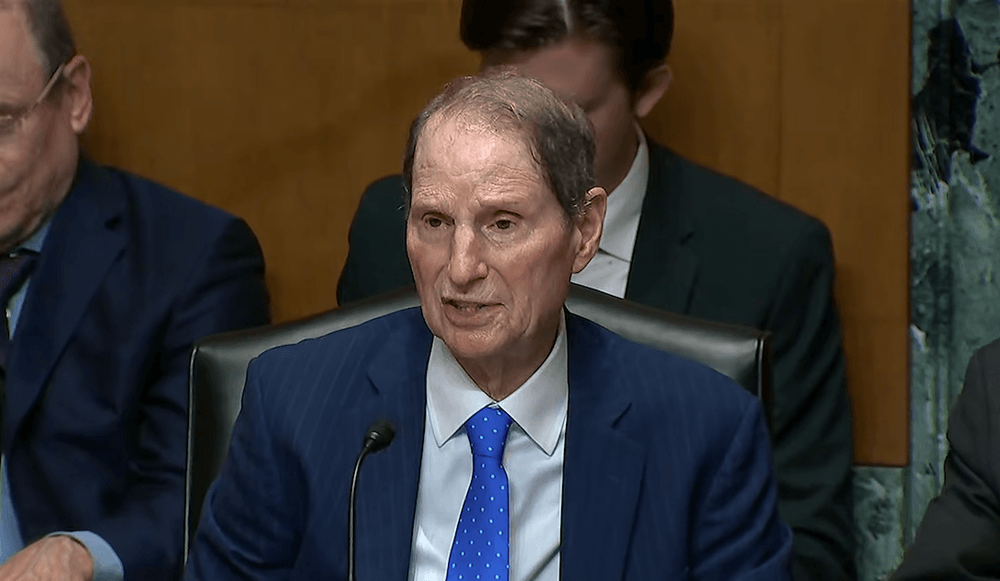
Proposed legislation moving through Canada’s Senate threatens U.S. national security and would allow Canadian intelligence and law enforcement authorities to surveil American citizens, Sen. Ron Wyden said in a letter to two senior Trump administration officials.
Wyden says the Lawful Access Act “threatens to weaponize American technology infrastructure by enabling the Canadian government to force U.S. companies to secretly facilitate surveillance of Americans, while systematically undermining the security of their products.” The letter, dated Thursday, went to acting Attorney General Todd Blanche and Secretary of State Marco Rubio, in his capacity as acting national security adviser.
The Canadian legislation would require providers to store user metadata — for example, location history — for up to a year. It also would allow the Canadian government to force providers to create backdoors or set up tracking.
The bill additionally would mandate that electronic service providers change their systems so they can easily share information with law enforcement equipped with a warrant.
It passed in Canada’s House of Commons but still needs Senate approval.
Wyden (D-OR) is calling on American officials to assess the law to better understand if it will allow the Canadian government to bully companies like Apple and Google into turning over data.
Similar proposals previously have created rifts with U.S. allies. In February 2025, it emerged that the U.K. secretly pressured Apple to make encrypted iCloud backups less secure for spying purposes. The disclosure sparked an uproar and British authorities abandoned the plan 6 months later.
Foreign requirements mandating U.S. companies help create backdoors violate citizens’ privacy and create severe cyber risks, former Director of National Intelligence Tulsi Gabbard told Congress at the time.
But U.S. law does not “explicitly prohibit American companies from secretly facilitating foreign surveillance of U.S. citizens — even if the target is the president or another senior U.S. government official,” Wyden’s letter said.
“This is not a dilemma of U.S. companies being caught between conflicting international legal obligations; it is a glaring statutory vacuum.”
The senator also recommended that U.S. officials leverage current negotiations over the U.S.-Canada CLOUD Act agreement “to establish ironclad, explicit prohibitions against these extraterritorial technical and prospective engineering mandates.”
The Citizen Lab, a Toronto-based digital freedom research institute, has said that aspects of the plan are likely unconstitutional in Canada.



Suzanne Smalley
is a reporter covering digital privacy, surveillance technologies and cybersecurity policy for The Record. She was previously a cybersecurity reporter at CyberScoop. Earlier in her career Suzanne covered the Boston Police Department for the Boston Globe and two presidential campaign cycles for Newsweek. She lives in Washington with her husband and three children.